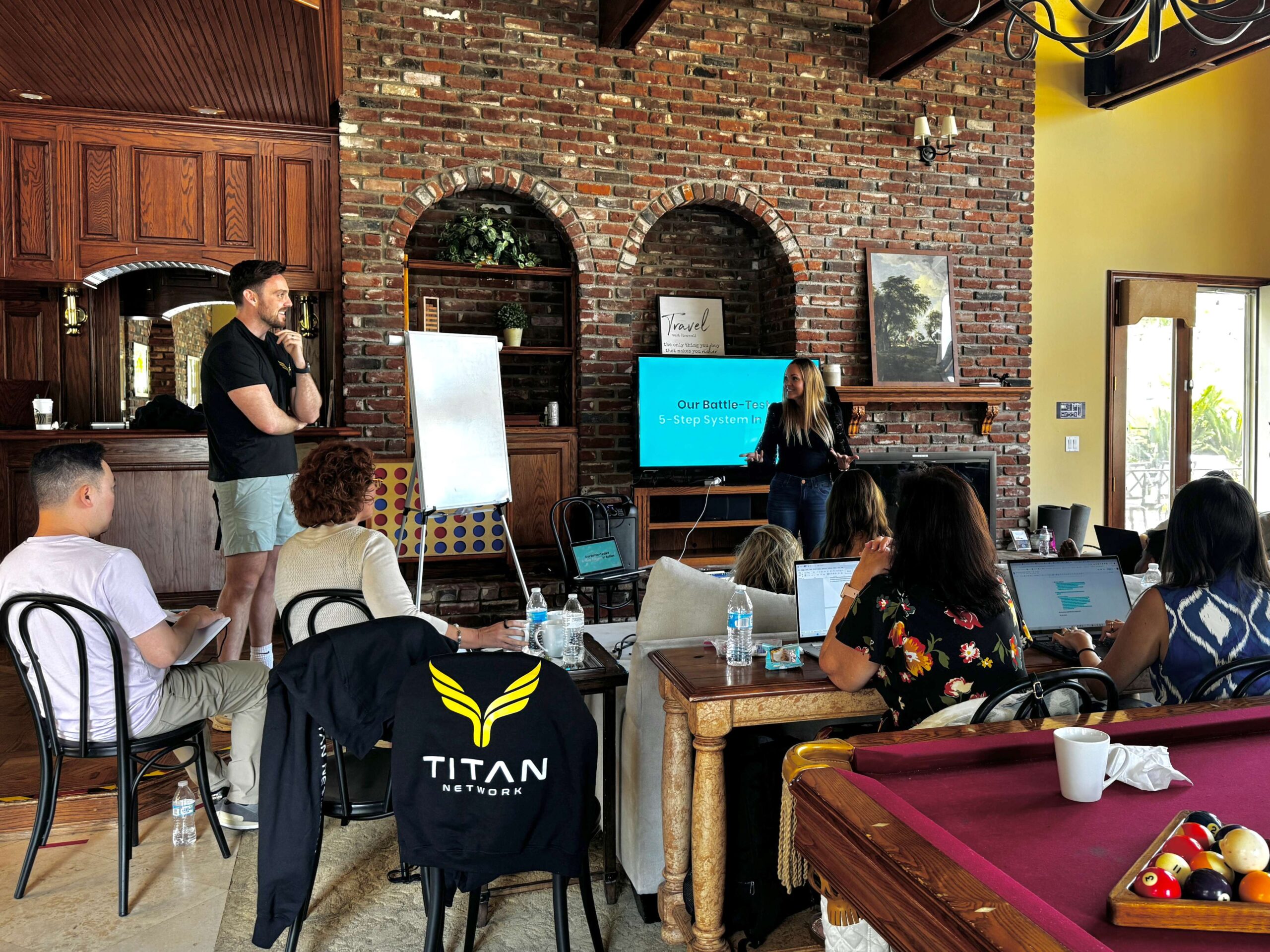
Amazon FBA courses vs. mastermind groups: which provides better ROI?
For established Amazon sellers doing $1M or more, mastermind groups generally deliver better ROI than courses: they fix execution speed and accountability, which is what established sellers usually lack. Courses win when you have a specific, defined knowledge gap, like a new PPC playbook or SOP documentation. The comparison below puts numbers on both.
Courses vs. Masterminds: The Core Trade-Off for 6-Figure Sellers
When you’re already doing $1M+ on Amazon, the question isn’t whether to invest in growth education. It’s about speed. Amazon FBA courses vs. mastermind groups: which provides better ROI? The answer depends on whether you need tactical knowledge or execution velocity. Most established sellers have enough knowledge. What is missing is the accountability structure that forces implementation.
What Each Option Actually Delivers
Courses give you frameworks: PPC optimization playbooks, creative testing SOPs, and supply chain negotiation scripts. You consume at your pace and implement when time allows. Masterminds give you peer pressure and real-time problem solving. Monthly P&L reviews with sellers at your level surface blind spots you would miss alone. One is a knowledge repository; the other is an execution engine.
The Execution Speed Gap: Why Scaling Timelines Differ
Self-paced learning means you solve problems in isolation. If you hit a DSP attribution issue, you search forums, test solo, and burn weeks. In a quality mastermind, someone already solved it last quarter. You implement a battle-tested fix in 48 hours. That compression multiplies across every growth initiative. Solo operators average 1 to 2 major profit optimizations yearly. Mastermind members execute 4 to 6 because peer accountability reduces procrastination.
Cost Structure and Hidden Commitments
Courses run $500 to $5,000 as one-time purchases. Masterminds cost $10,000 to $50,000+ annually and include application requirements. The real cost difference is opportunity cost. A course you complete in six months can delay profit gains by six months. A mastermind can compress that timeline to weeks, which can make the higher upfront investment irrelevant when measured against accelerated EBITDA growth.
| Factor | Courses | Masterminds |
|---|---|---|
| Primary Value | Tactical skill acquisition | Execution speed and accountability |
| Implementation Timeline | Self-paced (3 to 12 months typical) | Peer-enforced (days to weeks) |
| Problem Resolution | Solo troubleshooting | Real-time peer feedback |
| Annual Cost | $500 to $5,000 one-time | $10,000 to $50,000+ recurring |
| Best for Revenue Stage | Filling specific knowledge gaps | Scaling past $3M+ plateaus |
ROI Benchmarks: What the Data Shows About Growth and Margin Lift
The financial case for masterminds becomes clear when you track scaling velocity. Sellers working solo to grow from $3M to $7M take 36 to 42 months on average. Mastermind members with structured accountability hit that same milestone in 18 to 24 months. That 18-month acceleration represents millions in additional cash flow and significantly higher enterprise value at exit.
Scaling Velocity: Solo Operators vs. Mastermind Members
Speed matters more than cost when you are already profitable. A $20,000 annual mastermind investment that cuts your scaling timeline in half can deliver outsized returns. The peer accountability architecture forces monthly progress reviews. You cannot hide from your numbers when eight other sellers see your P&L. That social pressure reduces the procrastination that slows solo growth initiatives.
EBITDA and Profit Gains from Peer Accountability
Quality masterminds surface 3 to 5 margin leaks per member annually. One Titan Network member discovered $47,000 in redundant software subscriptions during a group audit session. Another identified a 4.2% COGS reduction through a supplier introduction from a fellow member. These wins compound. The average established seller in a structured mastermind sees 12% to 18% EBITDA improvement within 12 months, driven by peer-surfaced optimizations.
ROI Reality Check: A $2M seller adding 15% to EBITDA gains $300,000 in annual profit. That’s a 15x return on a $20,000 mastermind investment in year one alone, before accounting for accelerated scaling velocity or enterprise value multiplier gains.
Course ROI: Skill Acquisition vs Implementation Impact
Courses deliver strong ROI when you have a clear skill gap and the discipline to implement. A $2,000 advanced PPC course that teaches you DSP retargeting can add $50,000+ in annual profit if you execute immediately. The problem is that most course buyers never finish. Industry completion rates sit at 15% to 30%. You are not paying for knowledge; you are paying for knowledge you will actually use. Without accountability, that distinction collapses.
When Courses Make Sense (and When They Don’t)
Courses excel when you need specific technical skills your team lacks. Building your first DSP campaign? A $1,500 course with step-by-step attribution setup can save you $10,000 in agency fees. Documenting SOPs for your VA team? A structured operations course can give you templates that would take weeks to build internally. The ROI case is clear when you fill a defined knowledge gap with immediate application plans.
Courses as Foundational Systems: Ideal for Skill Gaps and SOPs
Advanced courses work best for discrete, technical problems. You need a creative testing framework for your main listing. You want to build internal PPC management capacity. You are launching into a new marketplace and need localization protocols. These are bounded challenges with clear completion criteria. A quality course delivers frameworks you implement once and reference indefinitely.
The Hidden Cost of Self-Paced Learning: Slow Problem Resolution
The weakness shows up during implementation. You hit an unexpected issue: your DSP campaign structure conflicts with your existing Sponsored Products strategy. Now you are stuck. Course forums can take 48 to 72 hours to respond. You post in Facebook groups and get conflicting advice from sellers at different revenue stages. Three weeks later, you are still troubleshooting while your competitor has already scaled that channel. This delay cost is invisible until you compare it to real-time peer feedback.
Outdated Content Trap: Why Video Libraries Lose Relevance Fast
Amazon changes attribution windows, updates Brand Analytics dashboards, and shifts Search Query Performance reporting. A course recorded 18 months ago can contain obsolete screenshots and deprecated strategies. You spend hours figuring out which modules still apply. Masterminds adapt in real time because members surface platform changes as they happen. That continuous intelligence loop is difficult to replicate in prerecorded content.
Pros
- Cost-effective for specific skill acquisition ($500 to $5,000)
- Learn at your own pace without scheduling constraints
- Permanent access to frameworks and templates
- Strong ROI when you have clear implementation plans
Cons
- No accountability structure to enforce completion
- Slow problem resolution during implementation
- Content becomes outdated as the platform evolves
- Low completion rates (15% to 30% industry average)
The Mastermind Advantage: Execution Speed, Peer Feedback, and Blind Spot Elimination
The real power of Amazon FBA courses vs. mastermind groups: which provides better ROI becomes obvious when you track implementation velocity. A seller in isolation takes three months to test, refine, and scale a new PPC strategy. A mastermind member presents initial results in week two, gets feedback from five sellers who already tested similar approaches, and reaches profitable scale in week four. That 10-week compression repeats across every growth initiative you launch.
Accountability Architecture: How Monthly P&L Reviews Surface Margin Leaks
Structured masterminds require monthly financial transparency. You present your P&L to the group. Someone immediately spots your 3PL costs running 2.1% above benchmark. Another member notices your return rate spiking on a specific ASIN. A third identifies your customer acquisition cost creeping up because you still run broad match campaigns that stopped working six months ago. These catches happen because fresh eyes see patterns you have normalized.
Peer Implementation Velocity: Battle-Tested Strategies Executed in Days, Not Months
When a Titan Network member shares a DSP retargeting sequence that added $83,000 in incremental revenue, seven other members implement variations within two weeks. They can shorten the testing phase because the strategy is already proven. They avoid mistakes because the originator shares what did not work. This collective learning speed is the core economic advantage. You are not just learning faster; you are profiting faster.
Breaking Through Plateaus: Real Examples from $3M to $7M in 18 Months
One member hit $3.2M and stalled for eight months. Solo troubleshooting identified the surface issues: rising ACOS, flat conversion rates, and increased competition. The mastermind diagnosed the real problem: the creative was stale, listing optimization had not evolved in 14 months, and the team underused Brand Referral Bonus opportunities. With peer accountability pushing implementation, the member executed a complete brand refresh, launched four line extensions using group-validated product research, and crossed $7M in 18 months. That acceleration came from execution speed, not new knowledge.
Managing Competitive Exposure: NDAs and Category Separation in Elite Groups
The legitimate concern is sharing P&L details with potential competitors. Quality masterminds solve this through category separation and binding NDAs. Titan Network groups never include direct competitors in the same cohort. Members sign confidentiality agreements with real enforcement. The trade-off calculation is simple: the competitive risk of sharing high-level strategy is small compared to the margin gains from peer-surfaced optimizations. You are not revealing supplier contacts or exact product specifications; you are sharing PPC structures and operational metrics that apply across categories.
Implementation Reality: A $4M seller in a structured mastermind executes an average of 4.7 major profit optimizations per year compared to 1.3 for solo operators at the same revenue level. Each optimization averages $40,000 to $120,000 in annual profit impact. That’s $188,000 to $564,000 in incremental EBITDA driven by peer accountability and accelerated execution.
The Hybrid Path: Courses + Masterminds as Your Scaling Engine
The either-or framing misses the real opportunity. Successful sellers use courses to plug specific knowledge gaps and masterminds to enforce implementation at speed. You take a DSP course to learn campaign architecture, then bring your first results to your mastermind for optimization feedback. You use a supply chain course to document SOPs, then have your group audit those processes for efficiency gaps. This integrated approach delivers both knowledge acquisition and execution velocity.
Strategic Sequencing: Courses for Foundation, Masterminds for Acceleration
Start with courses when you build foundational systems: PPC management, listing optimization, and inventory planning. These are technical skills with clear right answers. Once you are past $1M and hit growth plateaus, mastermind ROI compounds. You already know what to do; you need the accountability structure that forces you to do it. The sequencing matters because courses without implementation are wasted investment, and masterminds without foundational skills can frustrate the group.
Why Successful Sellers Do Both (Not Either/Or)
Every $5M+ seller I know invests in both ongoing education and peer accountability. They buy specialized courses for emerging channels: TikTok Shop, Amazon Live, and international expansion. They stay in masterminds for execution speed and blind spot elimination. The budget allocation typically runs 20% to courses and 80% to masterminds because the accountability component drives disproportionate returns once you are past the knowledge acquisition phase.
Evaluating Group Quality: Questions to Ask Before Investing $5K to $50K+
Not all masterminds deliver equal value. Ask: What is the revenue range of current members? (You want tight clustering, not $500K sellers mixed with $10M operators.) How do you handle category conflicts? What is the meeting structure and attendance requirement? Who facilitates, and what is their operational background? Can you speak with three current members before joining? Quality groups answer these immediately. Weak groups dodge specifics and focus on emotional community language instead of execution metrics.
The Titan Network Difference: Structured Systems + Peer Accountability
Titan Network combines battle-tested frameworks with enforced peer accountability. You get the structured systems that courses provide: PPC optimization protocols, creative testing SOPs, and margin analysis templates. You also get monthly mastermind sessions with revenue-matched sellers, quarterly deep-dive workshops on emerging channels, and direct access to operators who have scaled past every plateau you face. The hybrid model eliminates the choice between knowledge and execution. You get both, compressed into a single growth engine designed for established sellers ready to scale past $5M and beyond.
When evaluating Amazon FBA courses vs. mastermind groups: which provides better ROI, the answer depends on your current constraint. If you lack specific technical skills, courses can deliver strong returns. If you have knowledge but struggle with implementation speed, masterminds can compress your scaling timeline and surface margin leaks you would miss alone. For ambitious sellers targeting $10M+, the hybrid approach wins: courses for skill gaps, masterminds for execution velocity, and a structured system like Titan Network that integrates both into a proven scaling engine.
Making the Right Investment Decision for Your Business Stage
The choice between Amazon FBA courses vs. mastermind groups: which provides better ROI stops being theoretical when you map it to your current constraints. If you run lean operations with limited team capacity, courses let you build specific capabilities without ongoing commitments. If you are stuck at $2M to $4M despite knowing what needs to happen, the mastermind accountability structure breaks that paralysis. The investment decision is not about price; it is about identifying whether knowledge or execution speed is your primary bottleneck.
Revenue Stage and Investment Mapping
Sellers below $1M benefit most from foundational courses that build technical competency. Between $1M and $3M, selective course purchases for emerging channels make sense alongside your first mastermind entry. Past $3M, masterminds can deliver higher returns because execution speed compounds at scale. A 15% EBITDA improvement on $500K revenue adds $75,000. That same improvement on $5M adds $750,000. The accountability investment scales with your profit base.
Time Availability as a Deciding Factor
Courses require 20 to 40 hours of focused consumption plus implementation time. If you already work 60-hour weeks, that timeline stretches to months. Masterminds front-load the time investment with monthly meetings but compress implementation through peer pressure and proven playbooks. One member described it as “paying to eliminate my own procrastination.” That is accurate. You buy forced prioritization of profit-generating activities that would otherwise slide indefinitely.
Competitive Intelligence and Market Timing
Courses give you yesterday’s strategies. By the time content is recorded, edited, and published, the tactics can be 6 to 12 months old. Masterminds surface what works right now. When Amazon shifts attribution models or updates Brand Analytics, you hear about implementation impacts within days from members already testing. That real-time intelligence creates first-mover advantages on platform changes. Being three months early to a new opportunity is worth more than any course discount.
Maximizing Returns Through Strategic Integration
The highest-performing sellers treat education as a portfolio, not a single purchase. They allocate $15,000 to $30,000 annually across targeted courses and mastermind memberships. The key is strategic sequencing: use courses to build capabilities your team lacks, then use mastermind accountability to force implementation at speed. This integrated approach eliminates the weakness of each standalone option.
Quarterly Skill Gap Audits
Every quarter, assess where knowledge deficits cost you money. Cannot run effective DSP campaigns? That is a $2,000 course investment with a 90-day payback. Weak at creative testing? Another targeted course. These tactical purchases plug specific leaks. Your mastermind handles the bigger picture: overall strategy validation, margin optimization, and scaling roadmap accountability. The division keeps both investments focused on high-value applications.
Implementation Forcing Functions
Buy a course with a public commitment to your mastermind that you will present results in 60 days. That external deadline forces completion. One Titan Network member bought a supply chain optimization course and committed to sharing savings numbers at the next monthly meeting. Knowing seven peers would ask about progress, he completed implementation in five weeks instead of his usual six-month drift. The mastermind did not teach the content; it enforced the execution timeline.
Peer Validation Before Scaling Investment
Test new strategies on a small scale, bring results to your mastermind for validation, then scale with confidence. A member tested Amazon Posts for 30 days, generated preliminary attribution data, presented to the group, and got feedback that his creative approach limited performance. Two members shared higher-converting formats. He relaunched with peer-validated creative and increased his Posts budget tenfold because the group de-risked the scaling decision. That validation loop prevents expensive mistakes courses cannot catch.
The Evolving Education Environment for Amazon Sellers
The gap between courses and masterminds will widen as Amazon’s platform complexity increases. New ad types, international expansion requirements, multichannel attribution, and AI-driven optimization tools create knowledge demands that static courses cannot address. Sellers who thrive will be those with access to real-time peer intelligence and accountability structures that force rapid adaptation.
AI Tools and Knowledge Commoditization
ChatGPT already answers basic PPC questions better than most courses. As AI tools improve, tactical knowledge becomes commoditized. What remains valuable is strategic judgment: which opportunities to pursue, how to sequence growth initiatives, and when to scale versus optimize. That judgment develops through peer discussion and accountability, not video consumption. Masterminds become more important as foundational knowledge becomes freely available.
Platform Complexity and Specialization Demands
Amazon adds new features quarterly: Sponsored TV, Amazon Live, Subscribe & Save optimization, and international VAT navigation. No single course covers everything, and buying 12 courses yearly is inefficient. Masterminds distribute specialized knowledge across members through transformative workshops. Someone masters DSP, another dominates international expansion, and a third optimizes Subscribe & Save. You access that expertise through peer sharing instead of purchasing separate courses for each domain.
Exit Multiple Optimization and Enterprise Value
Sellers planning exits in 24 to 36 months need to optimize for EBITDA and growth trajectory, not just revenue. Masterminds provide the accountability to execute margin improvements and growth initiatives that increase enterprise value. A $5M business with 15% EBITDA and flat growth can receive a 2.5x to 3x multiple. That same business with 22% EBITDA and 30% YoY growth can command 4x to 5x. The mastermind investment that drives those metrics can add $2M to $4M to exit proceeds.
The Verdict: Choosing Your Growth Path
Amazon FBA courses vs. mastermind groups: which provides better ROI comes down to your current business stage and primary constraint. Courses win when you need specific technical skills with clear implementation plans. Masterminds win when you have knowledge but struggle with execution speed, need blind spot elimination, or target aggressive scaling timelines.
For established sellers doing $1M to $3M, start with one quality mastermind and supplement with targeted courses for skill gaps. Past $3M, increase mastermind investment and reduce course spending because accountability and peer intelligence can deliver higher returns at scale. A practical allocation is 75% to 80% of your education budget toward structured masterminds and 20% to 25% toward tactical courses for emerging capabilities.
Titan Network represents an integrated solution: battle-tested systems plus peer accountability and real-time intelligence. Members get structured frameworks for key growth drivers plus monthly execution accountability with revenue-matched sellers. The result is compressed scaling timelines, higher EBITDA, and continuous margin optimization that solo operators and most course buyers cannot match. When your goal is reaching $10M+ and building a sellable asset with maximum enterprise value, the hybrid approach stops being optional. It becomes the path that delivers the speed, accountability, and peer intelligence required to win in an increasingly competitive market.
The accountability structure that forces implementation is essentially what defines a mastermind group. This concept of peer accountability and collaborative problem solving dramatically accelerates execution speed and scaling outcomes.
No major discussion of Amazon selling platforms is complete without recognizing Amazon (company) itself, whose evolving infrastructure and tools set the stage for the seller strategies detailed in this article.
Many sellers leverage Fulfillment by Amazon to streamline logistics and focus on marketing and sales growth, reinforcing the need for strategic execution and accountability outlined throughout the content.
Frequently Asked Questions
For an established Amazon FBA seller, which offers better ROI, a course or a mastermind group?
For sellers already doing $1M+, mastermind groups generally provide better ROI. They focus on execution speed and accountability, which are often what established sellers lack, rather than just more tactical knowledge. This accelerates scaling timelines and significantly boosts profit.
When should an Amazon FBA seller choose a course over a mastermind group?
Courses are ideal when you have a specific, defined knowledge gap or need to build foundational systems. For example, if your team needs a new PPC optimization playbook or you are documenting SOPs, a course can deliver those frameworks. The ROI is clear when you have immediate application plans for the new skill.
How do Amazon FBA mastermind groups accelerate growth for established sellers?
Mastermind groups provide peer pressure and real-time problem-solving, acting as an execution engine. You get battle-tested solutions from other high-level sellers, compressing problem resolution from weeks to days. This peer accountability reduces procrastination and multiplies growth initiatives.
Are the higher costs of Amazon FBA mastermind groups justified for profitable sellers?
For profitable sellers, the higher upfront cost of masterminds is often justified by accelerated scaling velocity and profit gains. While courses can delay profit by months, masterminds compress timelines to weeks, leading to millions in additional cash flow. The opportunity cost of slow growth often outweighs the mastermind’s investment.
What common mistakes do established Amazon sellers make when investing in growth education?
A common mistake is investing in more tactical knowledge through courses when what is truly needed is execution velocity and accountability. Many established sellers already have enough knowledge but struggle with implementing it consistently. Another error is underestimating the hidden cost of self-paced learning, which can lead to slow problem resolution and delayed profit.
Can Amazon FBA courses or mastermind groups help sellers significantly increase their monthly profit?
Yes, both can, but masterminds are typically more effective for established sellers seeking significant profit increases. Masterminds often surface margin leaks and introduce COGS reductions through peer insights, leading to 12% to 18% EBITDA improvement within 12 months. Courses can also add profit if the acquired skill is immediately and fully implemented.
What is the primary difference in value between FBA courses and mastermind groups?
The primary difference is that courses offer knowledge frameworks, like PPC playbooks, for self-paced consumption. Mastermind groups, however, deliver execution speed and accountability through peer pressure and real-time problem-solving. One is a knowledge repository, the other is an execution engine.
About the Author
Dan Ashburn is the Co-Founder at Titan Network—the world’s leading community for Amazon sellers scaling to 7 and 8 figures. A former top 1% Amazon FBA seller turned growth strategist, Dan has spent the last decade engineering data-driven campaigns that have generated hundreds of millions in marketplace sales and DTC revenue for Titan’s partners.
At Titan Network, Dan, alongside his cofounder Athena Severi and their team of top talent, architects full-funnel growth frameworks that help margin-squeezed, time-poor brands unlock quick wins, shore up profits, and expand beyond Amazon. Their playbooks fuse advanced PPC automation, creative conversion-rate optimization, and airtight supply-chain SOPs—giving sellers the step-by-step systems, expert mentorship, and peer accountability they need to dominate crowded niches while safeguarding EBITDA.
A sought-after speaker at Prosper Show, SellerCon, and White Label Expo, Dan demystifies algorithm shifts and shares ROI-focused tactics—from DSP retargeting hacks to DTC attribution modeling—empowering operators to make confident, cash-generating decisions. Titan Network has positioned itself as the world’s premier Amazon Seller Mastermind, providing high-quality tactical strategies and pinpointing growth levers that move the profit needle this quarter.
Related guides: Best Amazon seller communities and masterminds · What Amazon masterminds cost · Free seller communities and trials