What's the difference between Amazon agencies and seller communities?
Amazon Agencies Deliver Managed Services: Here’s Exactly What You Get
When you’re running a seven-figure Amazon brand and your PPC TACoS creeps past 30%, agencies promise hands-on execution. They audit your account, rewrite listings with conversion-optimized copy, and manage campaigns daily. Your payment covers done-for-you service: someone else logs in, adjusts bids, launches DSP retargeting, and troubleshoots suppressed ASINs while you focus on product development or supply chain.
Core Services: PPC Optimization, Listing Rewrites, and Account Audits
Agencies bundle three core offerings. First, PPC management: they restructure campaigns, split-test keywords, and optimize bids to drop your TACoS by 5 to 10 points. Second, listing optimization: A+ content redesigns, title rewrites, and backend keyword updates to lift conversion rates. Third, account health audits: fixing policy violations, recovering suspended listings, and managing Seller Support escalations. You hand over admin access, and they execute.
Real Costs and Fee Structures for Seven-Figure Sellers
Expect 15% to 25% of ad spend monthly or flat retainers starting at $3,000. A $50,000 monthly ad budget translates to $7,500 to $12,500 in agency fees. Some add performance bonuses tied to revenue growth, pushing total costs higher. For a $3M brand, annual agency fees hit $90,000 to $150,000–a direct hit to EBITDA. Margin improvement must exceed the fee bleed, or you’re funding vendor profit instead of your own.
Case Study: How One Agency Fixed a $5M Account Suspension
A $5M seller faced full account suspension after a competitor filed false IP complaints. The agency compiled Plan of Action documents, escalated through Partner Support, and restored the account in 14 days. Revenue loss: $190,000. Agency fee for emergency work: $25,000. The seller kept the business alive, but created permanent dependency on external expertise.
Pros
- Immediate execution without hiring an internal team
- Specialized PPC and listing expertise
- Fast fixes for account suspensions and policy issues
Cons
- 15% to 25% fees erode profit margins over time
- Zero knowledge transfer to your team
- Limited strategic input on product expansion or SOPs
Seller Communities Build Peer Networks: Strengths and Limits Exposed
Communities don’t execute for you. They connect you with sellers who’ve solved your exact problems. You join squads, attend virtual events, and access shared SOPs on everything from freight forwarding to creative testing. The value? Peer learning and accountability, not outsourced labor.
Key Features: Squads, Events, and Shared SOPs From Top Sellers
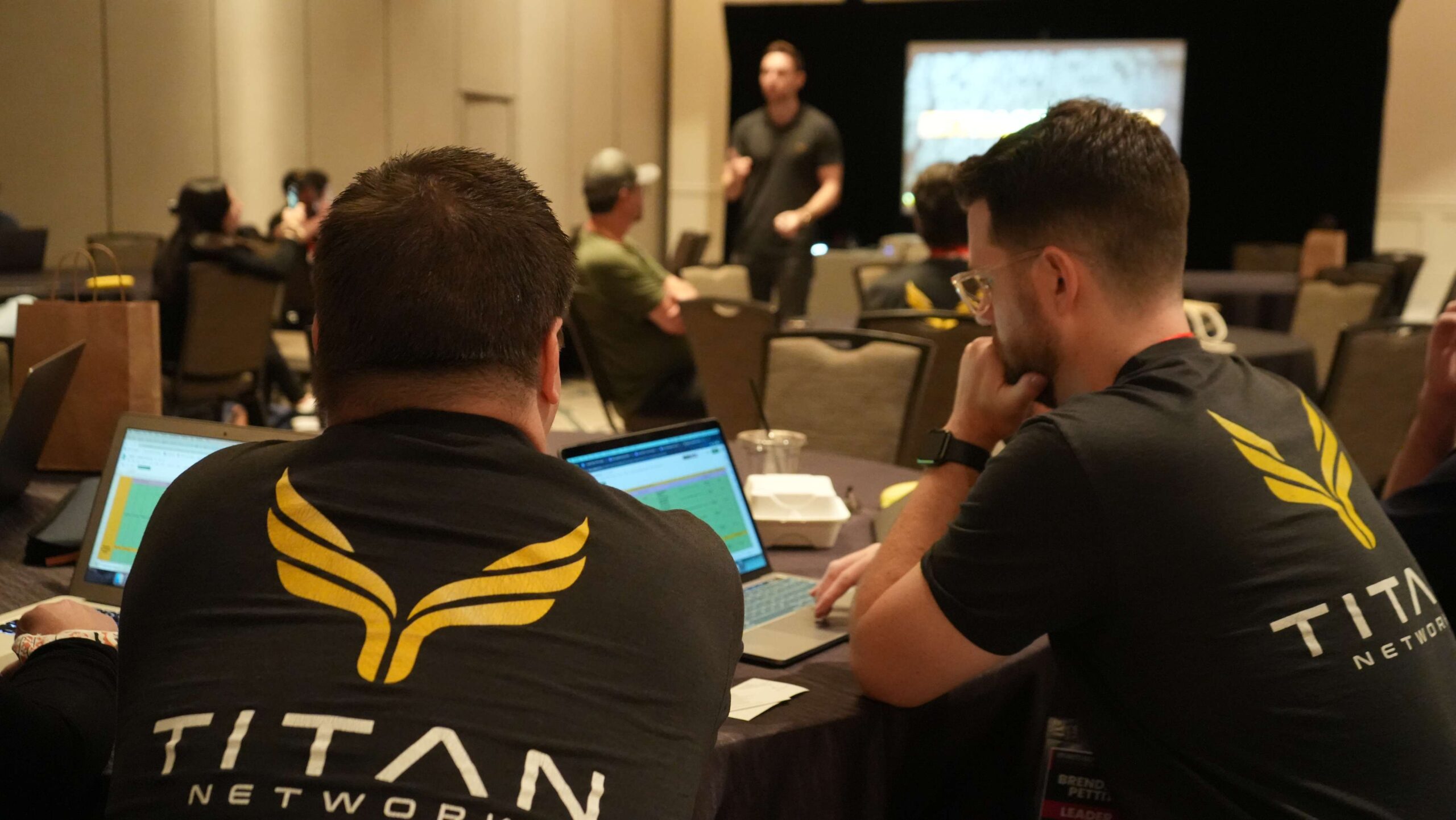
Titan Network structures this through weekly mentoring huddles, daily WorkParties for co-working accountability, and Titan Meetups for in-person strategy sessions. Members share PPC playbooks, supplier negotiation scripts, and team hiring frameworks. You implement yourself, but you’re not figuring it out alone. The TitanOS Playbook maps out growth strategies across PPC, product development, and team building.
Membership Investment vs. Time Costs for Scaled Operations
Most communities charge $500 to $5,000 annually–far below agency retainers. Titan Genesis starts at $997. The trade-off? Time. You invest hours digesting advice, testing strategies, and executing internally. If you’re doing $10M and your time is worth $500 per hour, spending 10 hours monthly in community calls costs $5,000 in opportunity cost. Communities work best when you have bandwidth to implement or a team to delegate execution.
Titan Network Example: Turning Isolation Into $2M Revenue Jumps
One Titan member hit a $2M plateau after three years of solo growth. Inside the community, he joined a squad focused on international expansion. Within six months, he launched in the UK and Germany using shared compliance SOPs and freight contacts from other members. Revenue jumped to $4.2M. The community didn’t manage his campaigns–it compressed his learning curve and helped him avoid costly mistakes.
| Feature | Amazon Agencies | Seller Communities |
|---|---|---|
| Execution Model | Done-for-you service | Peer-driven implementation |
| Cost Structure | 15% to 25% of ad spend or $3K+ monthly | $500 to $5K annual membership |
| Knowledge Transfer | Minimal to your team | Full playbooks and SOPs shared |
| Speed to Results | Immediate campaign changes | Requires internal execution time |
| Strategic Depth | Tactical account fixes | Holistic growth across operations, team, and finance |
Agencies vs. Communities: Side-by-Side Profit Impact Breakdown
Agencies execute campaigns and fix problems today. Communities arm you with strategies and peer intelligence to build internal systems. The choice hinges on control, speed, and long-term margin protection.
Control and Speed: Agency Execution vs. Community Advice
Agencies log into your account and make changes immediately. Your PPC restructure happens this week, not next quarter. Communities hand you the playbook–you or your team implements it. Lack internal PPC talent? Agencies deliver faster TACoS drops. Have a team ready to execute? Communities prevent the knowledge gap that keeps you dependent on vendors.
ROI Math: 15% to 25% Agency Fees vs. Community Membership Investment
A $5M brand spending $60,000 monthly on ads pays agencies $9,000 to $15,000 per month–$108,000 to $180,000 annually. Titan Network membership costs $997 for Genesis-level entry, with higher tiers under $10,000 yearly. Over three years, agencies cost $324,000 to $540,000. Communities cost $3,000 to $30,000. Agency ROI must exceed that fee delta through margin gains, or you’re bleeding profit.
When Agencies Win: PPC TACoS Drops and Margin Gains
Agencies shine when your TACoS hits 35% and your product margins can absorb 20% fees while still netting 15%. A skilled agency drops TACoS to 25%, freeing 10 points of margin. After their 3-point fee, you net 7 points. On $5M in revenue, that’s $350,000 back to EBITDA. The math works if execution speed matters more than building internal capability.
| Factor | Amazon Agencies | Seller Communities |
|---|---|---|
| Execution Model | Done-for-you: agency logs in and manages daily | Do-it-yourself: you implement with peer guidance |
| Cost Structure | 15% to 25% of ad spend or $3K to $15K monthly retainers | $997 to $10K annually for membership tiers |
| Speed to Results | Immediate changes, fast TACoS improvement | Slower: requires internal team bandwidth |
| Knowledge Transfer | Minimal: you stay dependent on a vendor | High: SOPs, playbooks, and peer mentorship |
| Strategic Depth | Narrow: PPC, listings, and account health only | Broad: supply chain, hiring, product expansion, and SOPs |
| Accountability | Contract-based deliverables | Peer squads, weekly huddles, and co-working sessions |
Agencies Win When
- You need emergency account suspension recovery
- No internal PPC or creative team exists
- Margins can absorb 20% fees and still hit profit targets
Communities Win When
- You want to build internal systems and reduce vendor dependency
- Your team has bandwidth to implement strategies
- Long-term EBITDA protection matters more than speed
Pick the Right Path: Agency, Community, or Hybrid for Your Scale
Your revenue stage dictates the optimal choice. A $3M seller hitting a TACoS wall needs fast fixes. A $10M brand battling isolation and margin erosion needs peer intelligence and systems. A hybrid approach combines both: agency execution for critical gaps plus community strategy for long-term capability.
Plateaued at $3M? Choose an Agency for Quick Fixes
Stuck at $3M with TACoS above 30% and no internal PPC expertise? Agencies deliver immediate relief. They restructure campaigns, split-test creatives, and recover lost margin within 60 days. Use that breathing room to hire your first PPC manager. The agency becomes a bridge, not a permanent crutch.
Hit $10M Walls? Demand Community Accountability
At $10M, your bottleneck isn’t PPC tactics–it’s team SOPs, supplier negotiations, international expansion, and strategic clarity. Communities solve isolation: you join squads with other eight-figure sellers who’ve walked your path. Titan Network members access transformative workshops for business growth, daily WorkParties for accountability, and exclusive partner deals on freight and compliance.
Titan Network’s Hybrid Edge: Proven Systems Plus Peer Accountability
Titan Network combines structured growth frameworks with peer mentorship. You get the TitanOS Playbook mapping PPC, product development, and team building. You also get weekly mentoring huddles, in-person Titan Meetups, and a dedicated platform free from Facebook noise. Members report 40% better TACoS performance than solo sellers because they implement proven systems while avoiding costly trial-and-error.
Decision Framework: Use agencies when you need emergency fixes or lack internal talent. Choose communities when you’re building long-term systems and want peer accountability. Combine both if your margins support agency fees while you develop internal capability through community learning.
2026 Amazon Shifts Demand Hybrid Strategies: Get Ahead Now
Amazon’s 2026 attribution changes and new DSP rules are forcing sellers to rethink their growth stacks. Agencies react to platform changes with tactical adjustments. Communities share early intelligence and test strategies collectively, compressing your adaptation timeline.
New DSP Rules and Attribution Changes: Agency Fixes vs. Community Workarounds
Amazon’s shifting attribution windows mean your current PPC structure may overreport or underreport conversions. Agencies will adjust campaign settings and bid strategies once the changes go live. Communities surface workarounds weeks earlier: Titan members have already tested multi-touch attribution models and shared results in daily WorkParties, giving everyone a head start.
Titan Data: Members Outpace Solo Sellers by 40% in TACoS
Titan Network tracked member performance across 2024-2025: sellers inside the community achieved 40% better TACoS than solo operators at the same revenue stage. The edge comes from shared testing, peer accountability, and access to proven playbooks that eliminate expensive mistakes. You’re not guessing which DSP strategy works–you’re implementing what other members already validated.
Apply Today: Lock in Your Growth Before Q2 Chaos Hits
Q2 2026 brings Prime Day prep, new compliance audits, and attribution rollout. Sellers without systems or peer support will scramble. Titan Network membership is by hand selection to maintain high expertise levels. Apply now to access TitanOS Playbook strategies, join accountability squads, and connect with verified sellers who’ve scaled past your current plateau. Pricing starts at $997 for Titan Genesis, with programs tailored to your business stage and growth journey.
Frequently Asked Questions
How much do Amazon agencies charge?
For seven-figure sellers, Amazon agencies typically charge 15% to 25% of your monthly ad spend, or flat retainers starting around $3,000. If you are spending $50,000 on ads, that is $7,500 to $12,500 in fees alone. Some also add performance bonuses, which can push your annual costs to $90,000 to $150,000 for a $3M brand.
How do Amazon agencies or communities help avoid costly mistakes?
Agencies provide immediate execution, fixing issues like account suspensions or policy violations quickly to prevent revenue loss. Seller communities, like Titan Network, offer shared SOPs and peer guidance on everything from freight to PPC playbooks. This compresses your learning curve and helps you avoid common, expensive errors by learning from others’ experiences.
What is the main difference between Amazon agencies and seller communities?
The core difference is execution versus peer learning. Agencies provide done-for-you services, logging into your account to manage campaigns and fix problems directly. Seller communities connect you with other experienced sellers for shared strategies, SOPs, and accountability, but you or your team handle the implementation.
When should an Amazon seller consider hiring an agency?
You should consider an agency if your PPC TACoS is high, perhaps past 30%, and you need immediate, hands-on execution without building an internal team. Agencies are also effective for fast fixes to critical issues like account suspensions or policy violations. They deliver quick tactical changes to improve specific metrics.
What are the downsides of relying on an Amazon agency?
The primary downside is the significant cost, with fees often eating 15% to 25% of your ad spend, directly impacting your EBITDA. Agencies also offer minimal knowledge transfer to your internal team, potentially creating long-term dependency. Their strategic input often focuses on tactical account fixes rather than holistic business growth.
How do Amazon seller communities support business growth?
Seller communities, such as Titan Network, provide a framework for peer learning and accountability. Members share proven strategies, supplier contacts, and team hiring frameworks, helping you scale your brand by avoiding costly mistakes and compressing your learning curve. They offer holistic growth across operations, team building, and finance.
What is the cost comparison between Amazon agencies and seller communities?
Agencies are significantly more expensive, costing 15% to 25% of ad spend or $3,000+ monthly retainers, potentially $100,000+ annually for larger brands. Seller communities, like Titan Genesis, typically charge $500 to $5,000 annually. The trade-off is agency fees cover execution, while community membership requires your time or your team’s time for implementation.
About the Author
Dan Ashburn is the Co-Founder at Titan Network—the world’s leading community for Amazon sellers scaling to 7 and 8 figures. A former top 1% Amazon FBA seller turned growth strategist, Dan has spent the last decade engineering data-driven campaigns that have generated hundreds of millions in marketplace sales and DTC revenue for Titan’s partners.
At Titan Network, Dan, alongside his cofounder Athena Severi and their team of top talent, architects full-funnel growth frameworks that help margin-squeezed, time-poor brands unlock quick wins, shore up profits, and expand beyond Amazon. Their playbooks fuse advanced PPC automation, creative conversion-rate optimization, and airtight supply-chain SOPs—giving sellers the step-by-step systems, expert mentorship, and peer accountability they need to dominate crowded niches while safeguarding EBITDA.
A sought-after speaker at Prosper Show, SellerCon, and White Label Expo, Dan demystifies algorithm shifts and shares ROI-focused tactics—from DSP retargeting hacks to DTC attribution modeling—empowering operators to make confident, cash-generating decisions. Titan Network has positioned itself as the world’s premier Amazon Seller Mastermind, providing high-quality tactical strategies and pinpointing growth levers that move the profit needle this quarter.