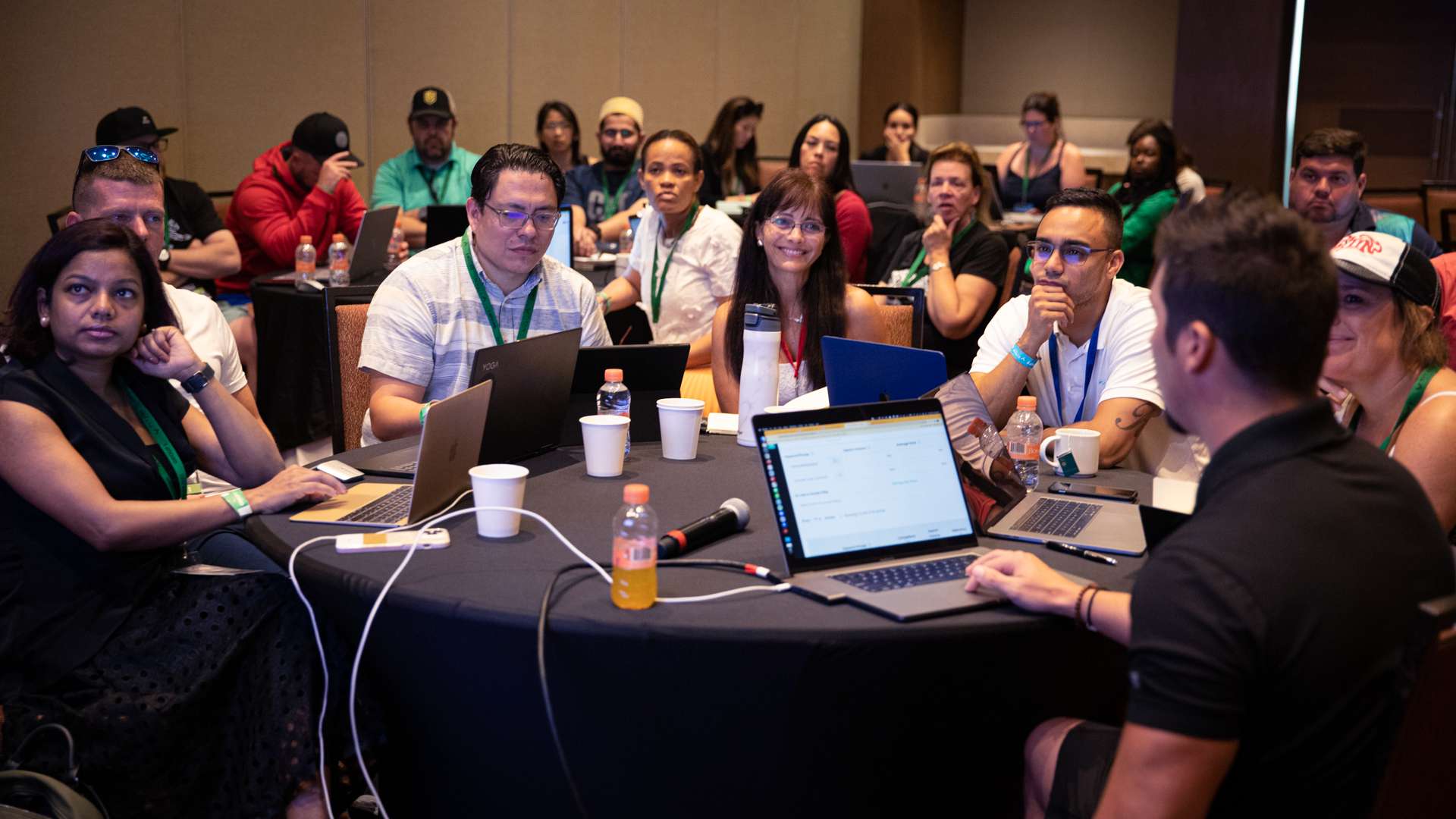
Affordable growth workshops for Amazon brands.
Affordable growth workshops for Amazon brands should be judged by the work you can complete, not session length or discount size. Before paying, check for practical deliverables, current channel guidance, and a clear next step for applying the material to your catalog and margins.
Key Takeaways
- Judge a workshop by the deliverables you walk away with, not the length of the sessions or the size of the discount.
- Prioritize workshops that teach current channel guidance across Amazon, TikTok Shop, and DTC instead of recycled tactics from years past.
- A strong workshop ties every lesson back to your catalog, margins, and profit rather than generic growth theory.
- Look for a clear application framework so you can implement what you learned on your own brand immediately.
- The best operators treat workshops as working sessions that feed directly into their multi-channel operating system, not passive learning events.
A useful workshop treats Amazon as a core sales channel and connects it to the rest of your ecommerce operation. Titan Network positions Amazon as The Cash Register, alongside TikTok Shop, Shopify, AI discovery, and product foundations.
What Counts as an Affordable Growth Workshop for Amazon Brands? (And What a Free One Should Still Deliver)
An affordable workshop provides relevant instruction and usable outputs at a price suited to your business stage. A free session can be worthwhile if it teaches a specific method and leaves you with an action plan. Paid programs should state the price, format, curriculum, and included support before you commit.
Workshop vs. course vs. coaching vs. agency: the spectrum explained
A workshop is a focused learning session on a topic such as advertising structure, listing conversion, or channel expansion. A course is usually self-paced and organized into lessons. Coaching adds direct feedback on your decisions or account; an agency executes agreed services on your behalf. These formats solve different problems. A workshop may suit a team that needs a shared framework. If you need account-specific decisions or implementation capacity, training alone may not close the gap.
Price ranges from free to $5,000+: what each tier should actually include
Price alone tells you little. The table is a buying framework, not a survey of fixed market rates: actual pricing and scope vary. Ask for deliverables in writing, including session length, materials access, feedback, and follow-up. A higher fee should mean more direct access or tailored work, not simply more recorded hours.
| Price tier | Reasonable deliverables to expect | Questions to ask |
|---|---|---|
| Free | A defined topic, practical teaching, and a useful next action | Is the session educational on its own, and is any paid offer disclosed? |
| Low-cost | Structured instruction, worksheets or templates, and time for questions | Can my team apply the material to a live business problem? |
| A clearly described scope, tailored input, meaningful access, or implementation support | Which specific outputs justify the fee, and who provides them? |
Why ‘affordable’ means deliverables per dollar, not the lowest sticker price
Compare the fee with usable outputs: a revised campaign structure, listing review, launch plan, or defined set of experiments. Factor in staff time, travel, and the cost of delaying execution. Generic advice may cost more than a focused workshop if your team spends hours turning vague recommendations into account-level decisions.
What to Expect Inside a High-Value Amazon Growth Workshop: Curriculum and Format Checklist

The curriculum checklist: advertising, listing optimization, brand building, and international expansion
Check the agenda for topics tied to operating decisions, not broad labels. Advertising instruction should cover campaign structure, search-term analysis, budget allocation, and the relationship between spend and contribution margin. Listing work should connect keyword relevance, images, content, and conversion. Brand building can cover catalog strategy and customer experience; international expansion should address market selection, localization, and operational requirements.
Hands-on components: live audits, templates, and weekly execution rooms
Look for time to apply the lesson to your business. A live audit can surface listing or campaign issues; a template can help your team repeat the analysis; a working session can turn recommendations into assigned tasks. Ask whether the instructor reviews participant work or only presents slides. Confirm the schedule and format of any ongoing execution room. Without ownership, deadlines, and a way to resolve questions, ideas can stall after the session.
Five-channel coverage map: Amazon, TikTok Shop, Shopify, AI/AEO, and Product/Foundation
Amazon can remain the cash register while other capabilities build discovery, customer ownership, and resilience. Use this map to check whether a workshop connects channel decisions to product economics rather than treating each platform as a separate project.
- Amazon: Marketplace sales, advertising, catalog health, and conversion.
- TikTok Shop: Social commerce, creator content, and a path from discovery to purchase.
- Shopify: Direct customer relationships, owned storefront data, and repeat-purchase mechanics.
- AI/AEO: Product information structured for discovery in AI-assisted search and answer experiences.
- Product/Foundation: Sourcing, product positioning, inventory planning, and the margin assumptions behind channel growth.
Ask which areas receive instruction and which are merely mentioned. The Cash Register: Amazon is part of Titan Network’s broader operating view, connecting channel choices to product and business fundamentals.
Ongoing support and community access after the workshop ends
Marketplace decisions rarely end when a session does. Confirm whether materials remain available, questions receive answers, and members can bring implementation issues to a community or scheduled follow-up. Clarify access duration and boundaries: a discussion group is not individual account review. A vetted network of 700+ ecommerce operators forms part of Titan Network’s context for peer learning, but verify the specific support included in the workshop you are considering.
Operator-Led vs. Trainer-Led: Why Instructor Credibility Changes the Material
Instructor credibility affects whether workshop decisions hold up in a live business. An operator can explain how constraints such as inventory cover, contribution margin, and ad efficiency shape campaign decisions. A trainer may know the subject well but teach from a fixed curriculum with limited account-level context. Neither title proves expertise. Look for current operating experience, clear examples, and a method your team can apply beyond the instructor’s personal anecdotes.
How to verify instructor credentials in under five minutes
Check whether the instructor identifies the businesses or roles behind their experience, describes the channels they have worked across, and explains what they personally handled. Compare the agenda with their stated expertise. A bio focused on marketplace advertising should connect to campaign structure, search-term analysis, or budget decisions, not just broad growth language.
- Look for a named instructor and a specific account, brand, or operating role.
- Check whether the examples cover recent marketplace conditions and practical trade-offs.
- Ask who leads the session and who answers questions after it.
- Request a sample deliverable or a clear description of what participants will produce.
Titan Network represents a vetted network of 700+ ecommerce operators, with brands in the network collectively behind billions in sales. Those figures describe the network, not a promise of workshop outcomes. If Amazon is part of your growth plan, The Cash Register: Amazon reflects the channel’s role in Titan’s broader ecommerce operating view.
Red flags: recycled content, hidden upsells, and single-channel bias
Watch for signs that a session may not match its sales page. A stale agenda can miss current platform rules and changing discovery behavior. Vague instructor biographies make operating experience hard to assess. A low entry price is not automatically a problem, but the workshop should disclose whether it leads into a paid service or program.
- Recycled content: Advice stays at the level of generic tips, with no clear process, examples, or current application.
- Hidden upsells: The session withholds core teaching until a higher-priced offer, or does not disclose the next sales step.
- Single-channel bias: The material treats Amazon in isolation and does not address connections to TikTok Shop, Shopify, AI discovery, or product economics.
- No follow-through: There is no stated way to access materials, ask implementation questions, or assign next steps.
Amazon remains a core Titan channel, now positioned as The Cash Register. The new direction keeps Amazon important but no longer the only focus. Ask whether the instructor can explain how channel choices affect customer ownership, inventory exposure, and margin across the business.
Free and low-cost workshops: when they’re worth your time and when they’re a funnel
A free or low-cost session can earn a place on your calendar if it teaches a defined skill and gives your team a next action. Judge the instruction, not the price alone. A session introducing a paid program can still be useful if its sales purpose is disclosed and the educational content stands on its own. Leave if the offer replaces the promised teaching or the instructor cannot answer basic questions about the topic.
How to Choose: A 10-Minute Evaluation Scorecard and Break-Even Math for Your Workshop Spend
Match workshop outputs to a known business constraint. In about 10 minutes, confirm the fee and format, inspect the deliverables, verify the instructor, and check what happens after the session. Affordable growth workshops for Amazon brands should state participation costs and the work expected from your team before payment. Score the offer against your current bottleneck, such as ad waste, weak listing conversion, or a channel expansion decision.
The evaluation scorecard: price, format, deliverables, credentials, and follow-through
Use this table to compare an offer with your operating needs. It is a decision aid, not a market rating. Resolve any missing information before you commit.
| Factor | What to verify | Buying signal |
|---|---|---|
| Price | Total fee, payment terms, and any additional costs | The full cost is disclosed before enrollment |
| Format | Live instruction, recordings, working time, and access limits | The format fits your team’s schedule and learning needs |
| Deliverables | Templates, account review, action plan, or other stated outputs | Each output connects to a current operating task |
| Credentials | Instructor role, relevant channel experience, and teaching scope | Experience aligns with the workshop’s subject |
| Follow-through | Material access, questions, feedback, and support duration | Post-session boundaries and access are stated clearly |
Calculating your workshop break-even point using monthly revenue and ad spend
Break-even means incremental contribution profit attributable to applying the workshop equals its total cost. Include the fee, staff time, travel, and implementation expenses. Divide the total by your contribution margin to estimate the incremental revenue required to recover the spend. Contribution margin is the share of revenue remaining after variable costs, including product cost, fulfillment, and advertising where applicable. Use your finance data, not a revenue target that ignores margin.
Monthly revenue and ad spend help frame the decision, but neither proves a workshop will pay back. A high-spend account may have room to improve campaign efficiency, while a margin-constrained catalog may need a different intervention first. Identify the metric the training could reasonably affect and set a review window before enrollment.
Decision tree: free, low-cost, or premium, which fits your stage and margin
If your question is narrow and the session has a clear agenda, start with a free workshop. If your team needs structured instruction and reusable materials, consider a low-cost option. If the decision requires tailored review, direct feedback, or defined implementation support, assess a premium program after confirming its scope and the margin available to fund it. Do not buy higher access when your team lacks the time or owner to execute recommendations.
Worked example: a 7-figure seller’s workshop ROI math
These are calculation assumptions, not a reported outcome or result guarantee. Add staff time and other participation costs to the fee before calculating the real hurdle.
The seller should ask whether the workshop addresses a measurable constraint and whether the team can implement its recommendations. If the session informs a campaign test or listing change, track the baseline, execution date, and contribution impact. Affordable growth workshops for Amazon brands are a sound purchase only when expected work and break-even conditions fit the business’s economics. The Cash Register: Amazon is Titan Network’s channel framework, not a guarantee of workshop returns.
FAQ: Affordable Amazon Growth Workshops

What is a reasonable price range for an affordable Amazon growth workshop?
There is no single reasonable fee. A short group session may be free or low-cost, while programs with tailored feedback or implementation support can cost substantially more. Affordable growth workshops for Amazon brands should state the total price, format, instructor access, and materials before enrollment. Judge the fee by the work you can complete afterward, not the number of slides or hours of video. For a premium price, ask for a written scope explaining who provides support and what your team receives.
Are free Amazon seller workshops worth attending?
Yes, if the session teaches a specific skill and provides value even if you do not buy another service. Check the agenda, presenter, and sales follow-up before reserving team time. A free session can answer a focused question or offer a method to test. It is less useful if the promised instruction is mostly a pitch or ignores your catalog, margins, and operating constraints. Treat it as education, not a substitute for reviewing your account data.
Can a workshop replace one-on-one coaching or an agency?
Usually not if your business needs individualized decisions or someone to execute the work. A workshop can align a team around a framework, teach a process, and identify next actions. Coaching provides direct feedback on your business; an agency may take responsibility for defined execution. Choose based on the gap: knowledge, judgment, or capacity. Titan positions The Cash Register: Amazon within a broader operating system, keeping Amazon important alongside other growth channels. The Cash Register: Amazon is not a replacement for account-specific advice or hands-on agency work.
How fast should I expect results from a workshop?
Expect improved clarity and execution speed, not a guaranteed sales lift by a set date. Timing depends on the recommendation, implementation capacity, inventory position, marketplace conditions, and the metric tracked. Before the session, record a baseline such as campaign efficiency, listing conversion, or contribution margin. Assign an owner and review date to each change so you can distinguish a useful lesson from seasonality or other business changes.
Frequently Asked Questions
What should an affordable growth workshop for Amazon brands include before you pay?
Affordable growth workshops for Amazon brands should include practical deliverables, current channel guidance, and a clear next step for applying the material to your catalog and margins. Ask in writing what your team leaves with, who reviews your work, and how the curriculum reflects today’s marketplace conditions.
Are free Amazon growth workshops worth attending?
Free Amazon growth workshops can be worthwhile if they teach a specific method and leave you with an action plan you can execute. Test whether the session is educational on its own, and check whether any paid offer is disclosed upfront.
How much do Amazon brand workshops cost and what should each price tier deliver?
Free sessions should teach a usable next action, low-cost options should include templates and Q&A time, and higher-priced programs should provide tailored input, meaningful access, or implementation support.
How is a workshop different from a course, coaching, or an agency for Amazon sellers?
A workshop is a focused session on one topic like advertising structure or listing conversion, while a course is self-paced lessons. Coaching adds direct feedback on your decisions, and an agency executes services on your behalf. Pick based on whether you need a shared framework or account-level execution.
What topics should a high-value Amazon growth workshop curriculum cover?
A high-value Amazon growth workshop should cover campaign structure, search-term analysis, budget allocation against contribution margin, listing conversion, brand building, and international expansion. Strong agendas tie topics to operating decisions rather than broad labels, and include hands-on audits, templates, and execution time.
How many Amazon sellers make over 100k in sales?
Growth depends on campaign efficiency, catalog health, margin management, and increasingly, building owned channels like Shopify alongside marketplace sales.
Can I make $1000 a month selling on Amazon?
Your results depend on product margins, advertising spend, and inventory planning. Serious operators connect Amazon to a broader system including product economics, social commerce, and owned customer relationships to build durable profit.