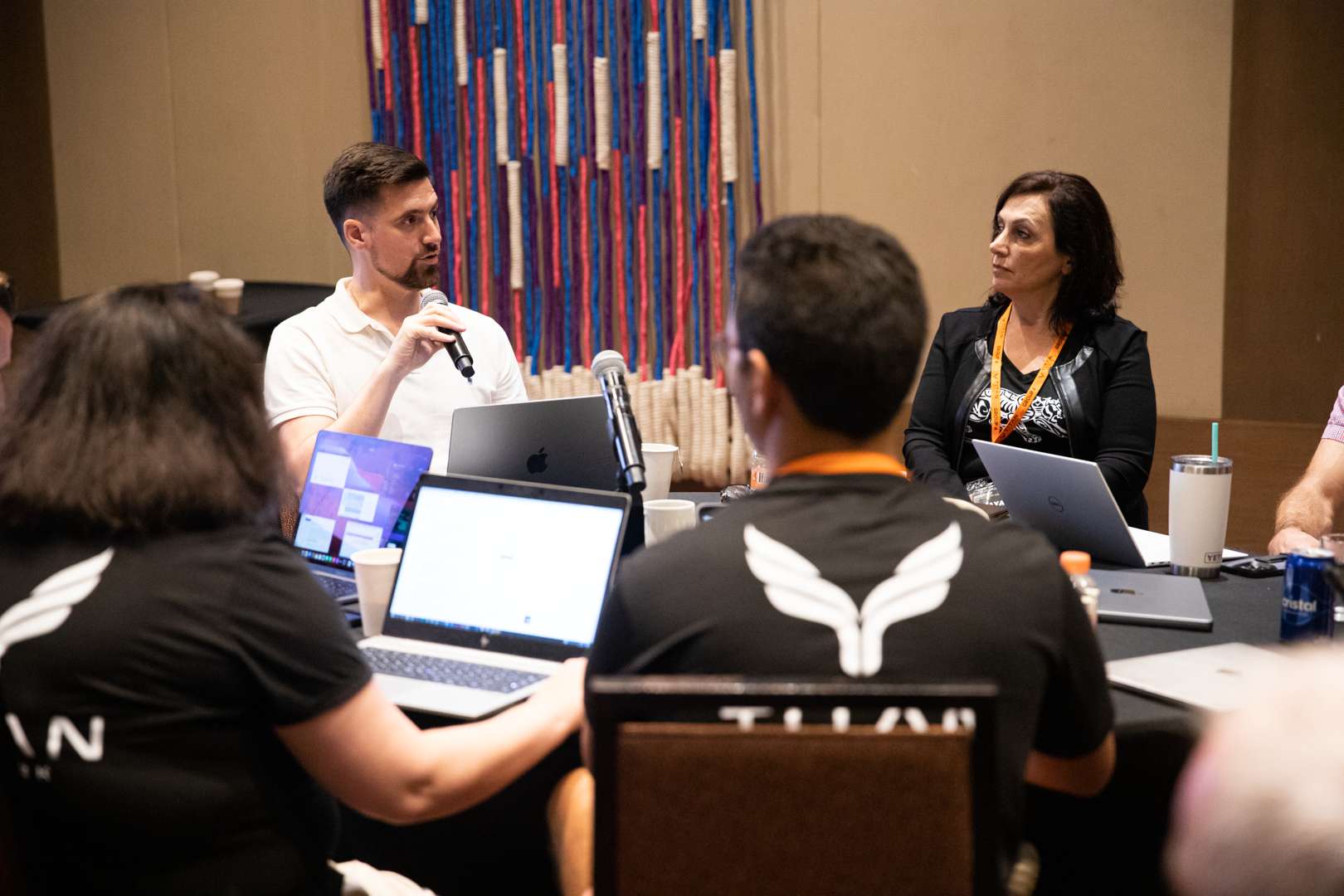
Affordable options for Amazon goal-setting workshops.
Affordable options for Amazon goal-setting workshops range from free official training to team-led planning and paid operator communities. For sellers who need goals reviewed after the meeting, Titan Network membership adds weekly execution rooms and peer feedback without the annual cost of many masterminds.
Key Takeaways
- Amazon offers free official training resources that give sellers a no-cost starting point for structured goal setting.
- Team-led planning sessions let established brands set targets internally without paying for outside facilitation.
- Paid operator communities deliver accountability and peer review that one-off workshops cannot sustain over a full year.
- Titan Network membership provides weekly execution rooms where sellers get goals pressure-tested against real margin and inventory numbers.
- Choosing the right format comes down to whether you need a one-time plan or ongoing execution support tied to profit.
Amazon remains a core Titan channel, now positioned as The Cash Register. The new direction keeps Amazon important but no longer the only focus, connecting marketplace targets with Shopify, TikTok Shop, product sourcing, and AI discovery.
Affordable Amazon Goal-Setting Workshops: Quick Answer and How We Evaluated Every Option
Quick takeaway: Start with Amazon Seller University and Amazon Ads Academy if your team needs baseline instruction at no cost. Run a focused DIY session to turn lessons into targets and owners. Choose a paid membership when you need recurring accountability and peer review, not just more lessons.
What an Amazon Goal-Setting Workshop Should Actually Include
A workshop should end with measurable goals, named owners, deadlines, and a review cadence. Amazon-specific targets might include ACOS and TACOS guardrails, inventory turns, sell-through rate, IPI, listing conversion, or launch velocity. Record the assumptions behind each target, such as planned spend, inbound timing, or a price change.
Without those outputs, a session is closer to training than planning. Videos can explain campaign structure or FBA workflows, but they do not choose which margin leak to address first or who will check progress next week.
Our Selection Criteria: Cost Per Outcome, Amazon Specificity, and Accountability
We compare each option by the work it helps a seller complete, its relevance to Amazon operations, and its support for follow-through. Cost alone is a weak filter: a free course can teach platform basics, while a paid room may be more economical if it prevents goals from sitting untouched between quarterly reviews.
We distinguish advertised tuition from the full operating cost. Include staff time, travel, preparation, and any sales process needed to get a price. Consider whether the format produces decisions the team can track against contribution margin, ad efficiency, stock coverage, and execution speed.
Why Most Free Content Fails as a Workshop (And When It’s Still Enough)
Free training is a sound starting point for platform knowledge or a specific task. It usually arrives as separate modules, not a facilitated planning session with shared priorities, owners, and a scheduled review. The gap is structure and accountability, not necessarily content quality.
For a small team with a clear operator leading the meeting, free resources may be sufficient. As channel complexity grows, recurring peer input can expose missed assumptions across ads, inventory, and launch plans. Choose based on whether the team can create that discipline internally.
Top Affordable Picks: Free, Low-Cost, and Membership Workshop Options Ranked

These picks are ranked by Amazon relevance, execution support, and cost. Free options cover learning and self-directed planning; membership ranks first for operators seeking recurring accountability. Public pricing can change, so confirm current terms before budgeting.
| Option | Typical cost | What it supports | Main trade-off |
|---|---|---|---|
| Titan Network membership | Weekly execution rooms, operator discussion, and Titan AI | Value depends on showing up and applying feedback | |
| Amazon Seller University and Amazon Ads Academy | Official seller and advertising education | Training does not set team goals or assign owners | |
| DIY team workshop | Shared targets, responsibilities, and review dates | Requires internal facilitation and follow-through | |
| Group coaching communities | Peer discussion and group accountability | Amazon specificity and access vary | |
| One-off workshops and events | Concentrated instruction and networking | Usually limited support after the event |
1. Titan Network Membership: Weekly Execution Rooms and Titan AI
Best for: Amazon and ecommerce operators with goals on paper who want a recurring forum to pressure-test decisions and maintain execution. Titan Network brings together 700+ vetted Amazon and ecommerce operators, providing peer feedback beyond a one-time workshop. Its operator network is behind billions in sales.
The Cash Register: Amazon keeps Amazon central within a broader operating system across channels. Weekly execution rooms provide a place to review priorities, and Titan AI can support planning materials and working documents. This is the standout pick when follow-through, rather than access to another lesson library, is the constraint. The Cash Register: Amazon reflects Amazon’s continuing role in a multi-channel business.
2. Amazon Seller University and Amazon Ads Academy: Free Official Training Paths
Best for: Sellers who need platform fundamentals or want their team to learn from Amazon’s training resources before setting quarterly targets. Both are free and provide the lowest-cost entry point in this comparison. Use them to build shared knowledge of seller operations and advertising, then turn lessons into account-specific actions.
Coursework does not facilitate a goal-setting meeting, assign owners, or check whether TACOS and inventory targets are on track. Treat the academies as reference material, not a complete workshop. They work well when a capable operator already owns planning and follow-up.
3. DIY Team Workshop Using a 90-Minute Agenda: $0
Best for: Teams with an internal leader who can bring clean performance data and make decisions. A self-run session connects results with revenue, advertising, inventory, listing, and launch priorities without tuition or travel. Quality depends on preparation and clear ownership after the meeting.
The main cost is staff time. Without ACOS, TACOS, sell-through, and stock-position data, discussion can drift into opinions. Set a facilitator, agree on metrics beforehand, and leave with deadlines and a weekly review appointment.
4. Group Coaching Communities and Peer Rooms Under $100 per Month
Best for: Sellers seeking regular discussion and peer benchmarking at a lower monthly cost than many formal coaching programs. Peers can question assumptions and share operating perspectives, which is why operators choose communities over solo course consumption.
Check Amazon depth, meeting frequency, member access, and moderation before joining. A general business group may not understand FBA constraints, campaign economics, or inventory planning.
5. One-Off Paid Workshops and Events: $200 to $1,000+
Best for: Teams seeking concentrated instruction, specialist input, or an event focused on a particular operating problem. A one-time workshop can bring people together and establish shared language.
Ask whether the fee includes work on your account data, follow-up materials, and implementation review. An event can prompt action, but does not replace a recurring execution rhythm.
Run Your Own Amazon Goal-Setting Workshop Today: The Free 90-Minute Agenda
A free workshop can produce useful decisions if the team arrives with clean data and leaves with owners, deadlines, and a review date. Use this agenda to connect marketplace performance with work that can improve profit, protect inventory, and move launches forward. It needs no outside facilitator or paid event, just preparation and someone empowered to keep the meeting on track.
Prep: Pull Your Numbers (ACOS, TACOS, Sell-Through Rate, IPI, Launch Velocity)
Share a consistent reporting window and pull the same measures for each relevant product. Bring ACOS and TACOS, sell-through rate, inventory position, IPI, launch velocity, revenue, contribution margin, and listing conversion where available. Include ad spend, stock coverage, inbound shipment timing, and major price or promotion changes to give results context.
Ask each function to bring one constraint and one proposed action. A media buyer might flag rising TACOS; operations might identify a replenishment risk. Record data gaps rather than guessing. The aim is a decision-ready view, not a perfect dashboard.
Minutes 0-30: Score Last Quarter Against Amazon-Specific Metrics
Compare actual results with last quarter’s targets. Review revenue and contribution margin alongside ACOS, TACOS, sell-through, stockouts, aged inventory, and launch performance. Separate controllable changes from outside factors such as supply delays or a marketplace disruption. For each miss or win, capture the likely cause and evidence.
Choose only a few operating issues for deeper discussion. If ad efficiency improved while profit fell, examine product mix, discounting, and fulfillment costs before raising the next revenue target. Diagnosis keeps the meeting focused on causes rather than disconnected symptoms.
Minutes 30-60: Set Revenue, Advertising, Inventory, Listing, and Launch Goals
Set targets across the parts of the business that drive results. Define a revenue or contribution-margin goal, advertising guardrail, inventory coverage target, listing improvement, and launch milestone where relevant. Give each target a baseline, measurement method, owner, and due date. Account for cash flow, supplier lead times, and team capacity.
Make dependencies clear. A sales target may require added ad spend and enough sellable stock; a listing test may need a conversion measure. If the business is also growing Shopify or TikTok Shop, note effects on shared inventory, creative production, or product sourcing.
Minutes 60-90: Assign Owners, Deadlines, and a Weekly Review Cadence
Turn each approved goal into an action with one accountable owner. Record the next step, deadline, leading indicator, and person who can resolve a blocker. Put weekly reviews on the calendar before ending the session. Focus reviews on progress, new risks, and decisions needed rather than repeating the quarterly discussion.
- Write down each goal, baseline, target, owner, and due date.
- Schedule the recurring check-in and decide which dashboard or report the team will use.
- Track blockers and decisions in one shared worksheet, with updates dated.
Using Titan AI to Generate Goal Trackers and Quarterly Review Templates for $0
Use Titan AI to draft a goal tracker or quarterly review template from the metrics and priorities your team supplies. Ask for fields covering baseline, target, owner, deadline, weekly status, and blockers, then check each field against your reporting and workflow. Treat the document as a starting point, not a substitute for checking account data or assigning responsibility.
For teams growing beyond Amazon, The Cash Register: Amazon remains part of a broader operating system. Use Titan AI to organize the planning document, then apply the same ownership discipline to cross-channel work. The Cash Register: Amazon stays central without making every growth decision Amazon-only.
How to Choose Based on Your Stage and Red Flags That Signal Overpriced Workshops
Choose a format based on the operating gap: knowledge, planning, or follow-through. Affordable options for Amazon goal-setting workshops should fit your team’s scale and decision needs, not just its training budget. A session has more value when goals connect to contribution margin, inventory health, advertising efficiency, and work across Amazon, Shopify, and TikTok Shop.
Best Fit by Seller Stage: Under $50K/Month, $50K-$500K, and 7-8 Figure Operators
For 7- and 8-figure operators, prioritize cross-functional decisions, clear owners, and recurring review over basic platform instruction.
Virtual vs. In-Person: Which Format Delivers More Value per Dollar
Virtual sessions reduce travel and make recurring reviews easier to schedule across teams. In-person workshops can help several functions resolve dependencies together, but include travel, staff time, and venue costs. Choose the format that helps decision-makers work through account data and leave with actions, not the one with the most polished setup.
Red Flags Checklist: Hidden Pricing, Sales-Call Funnels, and Generic Business Coaching
Before paying, confirm the total fee, session length, facilitator access, follow-up terms, and whether the work addresses Amazon operations. Watch for these warning signs:
- Pricing appears only after a sales call, with no written scope.
- The agenda avoids ACOS, TACOS, inventory, FBA, or listing performance.
- Promises focus on revenue growth without discussing margin, cash, or execution constraints.
- There is no defined output, owner, or post-session review.
How to Measure Workshop ROI With Sales, Advertising, and Operations Metrics
Set a baseline before the session and choose a few indicators tied to its goals. Track contribution margin, ACOS or TACOS, sell-through, stockouts, and completion of assigned actions over the review period. Compare results with the workshop cost, including staff time. This cannot prove the session alone caused a change, but it can show whether decisions were executed and targets moved.
FAQ: Amazon Goal-Setting Workshop Costs, Formats, and Fit

What Is a Reasonable Budget for an Amazon Goal-Setting Workshop?
A reasonable budget depends on the support you need. Free training and a team-run meeting can cover learning and planning. Compare fees with access, Amazon relevance, and follow-through.
Are There Free Amazon Goal-Setting Workshops or Training Paths?
Amazon Seller University and Amazon Ads Academy provide free official training. They are useful learning paths, but do not automatically set team targets or assign owners. A team can turn relevant lessons into a planning session with its own metrics, facilitator, and review date.
How Much Do Amazon Masterminds and Group Coaching Programs Cost?
Ask for current pricing and written details on meeting frequency, member access, and included services.
What Should an Amazon Goal-Setting Workshop Agenda Include?
Include a performance review, revenue and margin priorities, advertising and inventory targets, listing or launch actions, named owners, deadlines, and recurring review. Use measures such as ACOS, TACOS, sell-through, and IPI where relevant.
Can I Run My Own Workshop With My Team for Free?
Yes. An internal facilitator can lead a session using account data, a shared worksheet, and scheduled follow-up. For continued peer feedback and weekly execution rooms, Titan Network membership adds accountability. The Cash Register: Amazon keeps Amazon central within Titan’s broader ecommerce focus.
Frequently Asked Questions
What is a reasonable budget for an Amazon goal-setting workshop?
Factor in staff time and travel, not just advertised price.
Are there free Amazon goal-setting workshops or training paths?
Yes, Amazon Seller University and Amazon Ads Academy offer free official training on seller operations and advertising. The trade-off is that coursework teaches platform fundamentals but does not facilitate a planning session, assign owners, or track whether TACOS and inventory targets stay on pace.
How much do Amazon masterminds and group coaching programs cost?
What should an Amazon goal-setting workshop agenda include?
A solid agenda ends with measurable goals, named owners, deadlines, and a review cadence. Amazon-specific targets might include ACOS and TACOS guardrails, inventory turns, sell-through rate, IPI, listing conversion, or launch velocity, plus documented assumptions behind each number like planned spend or inbound timing.
Can I run my own Amazon goal-setting workshop with my team for free?
A focused 90-minute agenda connecting revenue, advertising, inventory, listing, and launch priorities works well; the real cost is staff time and follow-through discipline.
Why does most free Amazon training fail as a real workshop?
Free training arrives as separate modules, not a facilitated planning session with shared priorities, owners, and scheduled reviews. The gap is structure and accountability, not content quality. For a small team with a capable operator leading internally, free resources can be enough; complexity usually demands recurring peer input.
Are paid Amazon mastermind memberships worth it over free content?
Paid memberships are worth it when your constraint is follow-through rather than access to lessons. A community like Titan Network adds weekly execution rooms, peer feedback from 700+ vetted operators, and accountability pods, which can cost less than letting goals sit untouched between quarterly reviews.