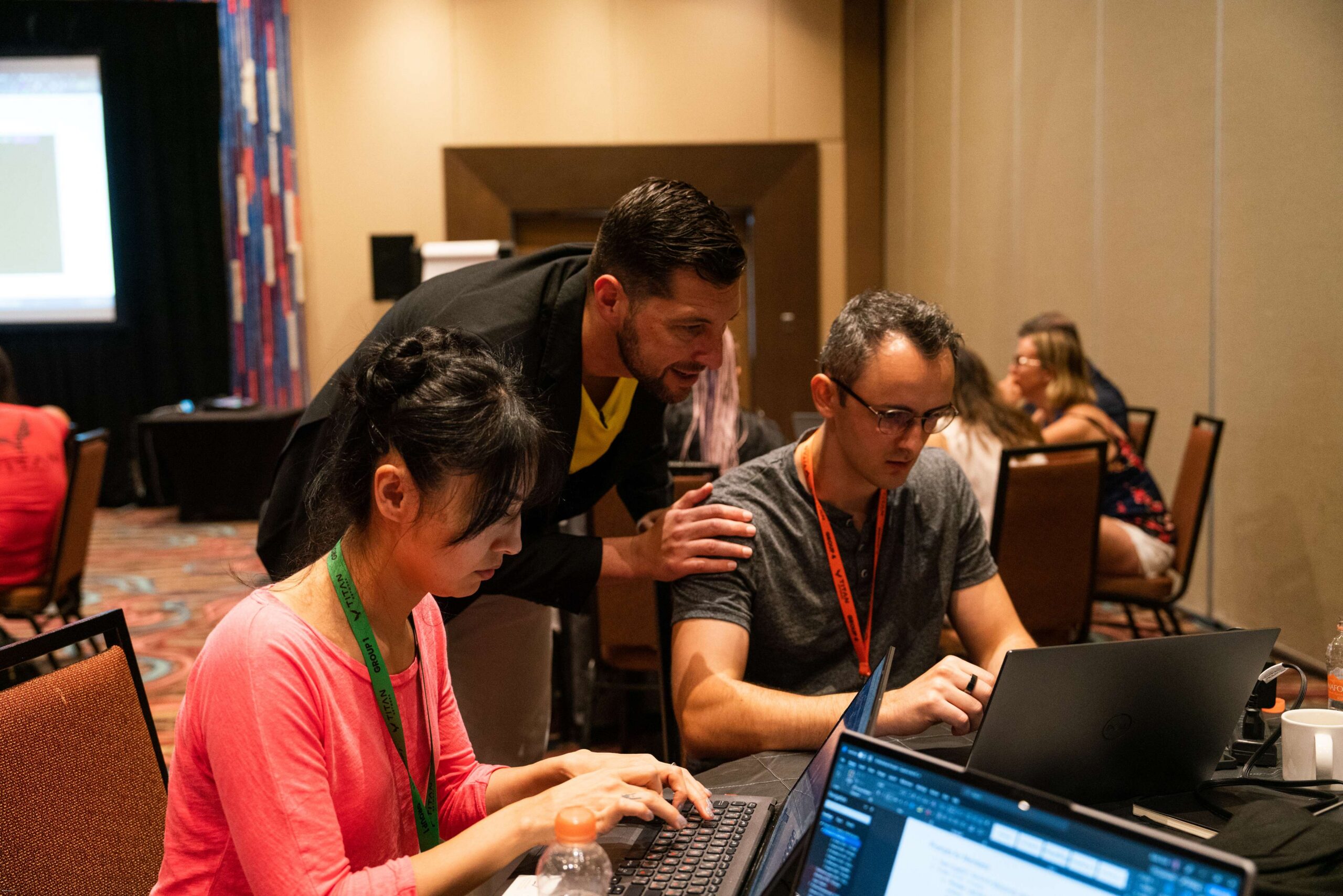
Compare free vs paid Amazon growth workshops.
If you are deciding whether to compare free vs paid Amazon growth workshops, start with the cost of delay, not the enrollment fee. Free material can explain Seller Central menus and basic PPC settings. It rarely gives a serious operator the diagnosis, feedback, accountability, or channel strategy needed to improve contribution margin and EBITDA.
Key Takeaways
- The cost of delay from poor channel execution far outweighs any workshop fee when you calculate lost margin and missed growth opportunities.
- Free workshops stop at Seller Central menus and basic PPC settings, leaving out the diagnosis and feedback that move contribution margin.
- Paid workshops deliver accountability and channel strategy adjustments that free content cannot provide for operators running seven and eight figure businesses.
- Your real return from a paid workshop is the EBITDA improvement from fixing channel mix, inventory pacing, and creative performance across Amazon and TikTok Shop.
Amazon remains a core Titan channel, now positioned as The Cash Register. The Cash Register: Amazon belongs in a broader operating system connecting product economics, advertising, inventory, Shopify, TikTok Shop, and AI discovery. The question is whether education shortens the path to better decisions.
The Real Cost of Free: Why “Zero-Dollar” Amazon Training Often Costs You Most
The Siren Song of Free: What You Get and What You Don’t
Free Amazon training is useful for orientation. It can teach terms such as Buy Box, fulfillment by Amazon, search term reports, TACoS, ACOS, listing suppression, variation rules, and inventory performance. The problem begins when foundational instruction is mistaken for an operating plan. A video cannot inspect blended advertising cost, contribution margin, replenishment lead time, creative testing cadence, or SKU-level cash flow.
That distinction matters as revenue grows. A higher conversion rate may be valuable, while sales can still conceal weak profit after advertising, returns, storage, freight, discounts, and agency fees. When comparing free vs paid Amazon growth workshops, ask which format can identify the business constraint, not which contains the most hours of content.
Amazon Seller University: The Baseline Essentials
Amazon Seller University teaches how Amazon systems work, including account setup, product detail pages, fulfillment, inventory, advertising basics, brand tools, policy requirements, and seller performance. Because Amazon controls the platform, its documentation is a sensible reference for rules and feature definitions.
It is not a private operator room. Seller University does not know whether a campaign is consuming margin, whether a variation will complicate forecasting, or whether a promotion will pull demand from a higher-margin channel. Treat it as baseline documentation, then add business-specific analysis, testing priorities, and execution review.
YouTube and Software Provider Webinars: The Pitch-Fest Trap
Software webinars often teach through a product demonstration covering keyword mining, competitor research, rank tracking, bid automation, or listing analysis. The commercial incentive remains: a session may steer viewers toward a subscription, agency package, audit, or product bundle before establishing whether the tool fits the brand.
YouTube requires the same filter. Revenue screenshots may omit refunds, landed cost, advertising allocation, inventory write-offs, or owner compensation. A tactic valid in one category can damage another. Before accepting a recommendation, ask for a decision rule, measurement window, downside scenario, and method for validating the result in your account.
The Hidden Drain: Time Investment, Outdated Tactics, and Missed Opportunities
The visible price of free content is zero, but attention is an operating expense. A founder can spend weeks collecting PPC tips, product research methods, launch checklists, and ranking theories without choosing a test, assigning an owner, or setting a stop condition. That delay can affect forecasts, reorders, and cash conversion.
Amazon changes continuously. Advertising placements, attribution, fees, category competition, and shopper expectations shift. A tactic recorded before an update may sound authoritative while producing poor incrementality. Free material also tends to isolate Amazon from Shopify retention, TikTok Shop demand creation, sourcing, and AI answer visibility. The missed opportunity is failure to build a connected growth loop.
Why Free Fails Serious Operators: Lack of Depth, Accountability, and Peer Vetting
Self-directed material works for definitions and procedures. It breaks down when a business needs judgment. A serious operator may need someone to challenge a launch forecast, review search query data, question a discount, inspect blended ACOS, and connect advertising decisions to EBITDA. Static lessons cannot provide that pressure.
Peer quality matters too. Public comments rarely provide verified context about scale, inventory exposure, category restrictions, or profit margins. A vetted group can separate a repeatable process from a lucky product cycle. The right paid format should create a setting where owners bring real constraints, defend assumptions, and leave with an executable priority list.
Deconstructing Paid Amazon Growth Workshops: Beyond the Price Tag

What Paid Programs Promise: Accountability, Vetted Insights, and Operator Networks
A legitimate paid workshop should provide more than recorded lessons. Its value should appear in faster decisions, fewer expensive experiments, clearer ownership, and better measurement. Accountability may include weekly commitments, live account reviews, implementation deadlines, and follow-up. Vetted insights require explaining the conditions behind a tactic, including where it fails.
Compare free vs paid Amazon growth workshops by tracing instruction to execution. Does the program help move from a high ACOS campaign to a profitable budget allocation? Can the group examine a listing, pricing architecture, forecast, or launch plan without hiding behind generic advice? These questions show whether the fee purchases operating access or packaged information.
Types of Paid Engagements: Cohorts, Masterminds, and Execution Rooms
A cohort provides a schedule, shared curriculum, and common milestones. A mastermind is more discussion-led and depends on member selection, confidentiality, preparation, and facilitation. An execution room is closest to day-to-day operations: members bring dashboards, creative tests, inventory issues, campaign structures, or channel decisions for review. For a 7 or 8 figure brand, this can be more useful than more theory.
Ask how often members receive feedback, which data they submit, and whether implementation is reviewed after meetings.
The “Operator ROI” Framework: Evaluating Paid Value with Hard Metrics
Calculate workshop ROI against the expected bottleneck. Track gross margin, contribution margin, ACOS, TACoS, conversion rate, organic sales share, inventory turns, stockout days, return rate, and EBITDA. Establish a baseline before enrollment, define the measurement window, and assign a decision owner. A program cannot claim credit for every sales increase during a seasonal period.
Ask what measurable improvement would repay the fee: lower wasted ad spend, faster creative iteration, improved forecast accuracy, or one avoided inventory mistake. Compare free vs paid Amazon growth workshops through profit retention, execution speed, and repeatable capability, not top-line volume alone.
Key Curriculum Differentiators: Advanced PPC, Omni-Channel Strategy, and AI Integration
Advanced curriculum should address query harvesting, placement economics, negative keyword governance, incrementality, budget pacing, branded and nonbranded demand, retail readiness, catalog architecture, creative testing, pricing, promotions, sourcing, cash planning, and margin protection.
Modern operators also need cross-channel thinking. A useful program connects Amazon with Shopify customer ownership, TikTok Shop content velocity, product development, and AI-assisted research. Titan Network positions The Cash Register: Amazon as one operating component supporting faster cross-channel decisions.
Spotting Red Flags: Third-Party Modeled Numbers vs. Verified Operator Dashboards
Revenue screenshots are weak proof. Ask whether performance comes from a seller account, modeled estimate, marketplace calculator, or case study excluding product cost and advertising. Stronger evidence includes dated dashboards, anonymized campaign data, margin definitions, cohort retention, and a clear explanation of what the program influenced.
Signals of a credible paid program
- Clear baseline metrics and defined measurement periods
- Live reviews tied to real operating decisions
- Transparent explanation of costs, constraints, and attribution
- Peers with relevant scale and category experience
Signals to question
- Revenue claims without margin or spend context
- Testimonials that cannot explain the operating process
- One tactic presented as universal across categories
- Pressure to enroll before reviewing the curriculum and access model
Free vs. Paid Amazon Growth Workshops: A Side-by-Side Operator’s Comparison
Free material explains platform mechanics and provides a reference library. Paid instruction earns its place when it helps diagnose account performance, prioritize action, and connect Amazon decisions to contribution margin, inventory, cash flow, and EBITDA. The right choice depends on the operating constraint behind the purchase.
Comparison Table: Feature Breakdown for Serious Operators
Use the table as a buying filter, not a claim that every paid program delivers equal value. The difference is usually context, feedback, accountability, and commercial judgment rather than lesson count.
| Criterion | Free training | Paid workshop or operator room |
|---|---|---|
| Cost | No enrollment fee, with time and attention as the main expense. | Direct investment that should be measured against a defined business outcome. |
| Content depth | Platform terminology, setup guidance, basic PPC, listing, and fulfillment education. | Account-specific diagnosis, advanced advertising, margin analysis, forecasting, and execution priorities. |
| Accountability | Self-directed learning with no required implementation review. | Scheduled commitments, live audits, progress checks, and owner-level follow-through. |
| Peer group | Public comments and broad communities with unverified operating context. | Selected sellers who can discuss inventory exposure, category economics, creative, and cash conversion. |
| ROI focus | Often centered on sales, rankings, traffic, or tool usage. | Can be tied to ACOS, TACoS, contribution margin, conversion, stockouts, and EBITDA. |
| Omni-channel integration | Usually Amazon-specific and tactic-led. | May connect Amazon with Shopify, TikTok Shop, sourcing, retention, and AI discovery. |
When Free Training Is Sufficient, and When It Is Not
Free training is sufficient for Seller Central navigation, product detail page requirements, fulfillment options, brand tools, search term reports, basic campaign structure, policy changes, and platform definitions.
It is not sufficient when advertising spend rises while contribution margin falls, a launch lacks a cash forecast, or a replenishment decision could create a stockout. Generic tutorials will not rank those choices. Compare free vs paid Amazon growth workshops by the quality of decisions produced, not the volume of content consumed.
Identifying Readiness for Paid Investment: Key Decision Triggers
Paid support becomes easier to justify when:
- The brand has enough sales volume that small changes in ACOS, conversion rate, or return rate affect monthly profit.
- The founder is the primary decision-maker for PPC, inventory, creative, pricing, and channel expansion.
- The team has dashboards but lacks agreement about which metric should govern the next move.
- Repeated experiments produce activity without a documented hypothesis, owner, deadline, or stop rule.
- Amazon growth is absorbing attention needed for Shopify retention, TikTok Shop testing, or product development.
A paid program is a poor fit if the operator cannot provide baseline numbers or assign someone to implement the work. Training cannot compensate for missing data, weak unit economics, or no operating capacity. The fee should purchase faster execution against a defined constraint.
The Transition Point: From Solo Amazon Tactics to a Cross-Channel Operating System
The transition happens when Amazon decisions affect the company: a promotion changes inventory velocity, a PPC shift changes cash needs, or a product review reveals a creative or packaging problem affecting Shopify conversion and TikTok Shop content. Isolated Amazon tactics then create fragmented decisions.
Amazon remains a core Titan channel, positioned as The Cash Register: Amazon. The next step connects that cash register to customer ownership, sourcing, creative production, and AI-assisted discovery. Titan Network treats The Cash Register: Amazon as one operating component rather than another disconnected tactic library.
How to Audit Paid Amazon Growth Programs: A Vetting Checklist
Audit the operator, curriculum, feedback model, and proof of financial impact before committing budget, data access, or team time. A polished sales page is not evidence. Ask whether the program can improve decisions inside your business under its category constraints and metrics.
Evaluating Workshop Leaders: Verifiable Experience vs. Marketing Hype
Ask leaders to explain experience through decisions, not slogans. Can they discuss bid controls, catalog structure, inventory exposure, contribution margin, cash conversion, and EBITDA without reducing the conversation to revenue screenshots? Look for dated examples, clear definitions, and evidence separating advertising performance from total business performance.
Request the conditions behind each case study: category, sales period, ad spend, landed cost, returns, promotions, and stock availability. A credible facilitator should explain where a tactic failed or required modification, since Amazon strategies depend on price, review velocity, competition, conversion rate, and supply continuity.
Assessing Curriculum Relevance: Does It Address Modern Omni-Channel Challenges?
Review the syllabus for more than keyword research and campaign setup. Operators need retail media economics, search query analysis, placement strategy, creative testing, pricing architecture, demand forecasting, margin protection, Shopify retention, TikTok Shop content, sourcing, customer data, and AI-assisted discovery.
Ask how lessons become decisions. A useful module might require a baseline TACoS report, forecast review, channel allocation hypothesis, and post-test readout. Material without owners, deadlines, measurement windows, or stop conditions is education without an execution mechanism.
The Accountability Factor: Live Audits, Execution Rooms, and Peer Review
Confirm the feedback format. Live audits should involve search term reports, campaign budgets, product margins, inventory projections, or creative performance. Execution rooms should end with documented actions, assigned owners, and a review date. Peer review is useful when members bring comparable scale and evidence.
Check access limits, including the number of reviews, recording availability, confidentiality procedures, and between-meeting support. A smaller room can produce more value when preparation standards and participation rules are explicit.
ROI Verification: Proof of Profitability and Measurable Growth
Set a break-even target before paying. It might involve reduced wasted spend, improved conversion, fewer stockout days, faster creative iteration, better inventory turns, or EBITDA improvement. Establish the baseline, owner, reporting cadence, and attribution limits. Seasonal demand or a promotion should not be credited to a workshop without a controlled explanation.
Prefer evidence with profit context. ACOS can improve while contribution margin declines if discounts, fees, or product costs rise. Ask whether the program tracks incremental sales, blended advertising cost, repeat purchase behavior, and cash requirements.
The Titan Network Advantage: Building an Omni Operating System, Not Just Amazon Tactics
The Cash Register: Amazon is positioned inside Titan Network as a core revenue channel, not an isolated tactic library. The operating view connects Amazon performance with product economics, Shopify ownership, TikTok Shop testing, sourcing, creative production, and AI discovery. That structure serves founders whose constraint is channel coordination rather than another campaign adjustment.
Beyond Amazon: The Omni-Channel Imperative and Operator Execution

Why Amazon-Only Growth Is a Vulnerability in Today’s Market
Amazon remains a powerful demand channel, yet dependence creates exposure to fee changes, policy decisions, ranking volatility, listing restrictions, and limited customer ownership. eMarketer reported 168.3 million US adult Prime users in 2025, while Adobe Analytics measured $24.1 billion in Prime Day consumer spending. Those figures show demand strength, not immunity from concentration risk.
Integrating TikTok Shop, Shopify, and AI for Compounding Returns
Shopify can support first-party customer relationships, TikTok Shop can turn creator content into measurable demand, and AI tools can accelerate research, merchandising, and content production. Shared inputs allow product feedback to inform creative, creative to inform listings, and channel data to improve forecasting and allocation.
Titan AI and AEO: Strategic Advantages for Modern Ecommerce Operators
Titan AI and answer engine optimization help teams organize product facts, customer questions, claims, and buying contexts for AI-mediated discovery. The objective is accurate, commercially useful answers supporting consideration across search, marketplaces, social commerce, and owned channels.
The Power of a Vetted Operator Network for Cross-Channel Execution
A vetted peer network lets founders test assumptions before committing capital. Operators can compare inventory plans, creative tests, channel economics, agency decisions, and measurement standards with people who understand scale. That feedback reduces isolated decision-making and speeds learning.
Conclusion: Investing in Systems for Speed, Profit, and Defensibility
The next investment should strengthen the operating system around The Cash Register: Amazon, not add another disconnected lesson library. Choose education linking execution to profit, customer ownership, speed, and defensibility. Titan Network is built for that shift: Amazon stays central while TikTok Shop, Shopify, AI, sourcing, and operator judgment work from one commercial plan.
Frequently Asked Questions
What is the best Amazon course on YouTube?
The best Amazon course on YouTube is one that teaches decision rules, profit measurement, and current account practices rather than isolated tactics. Free YouTube training can cover Seller Central, PPC, listings, and inventory basics, but paid workshops may add account review, accountability, and peer feedback. Test every recommendation against contribution margin and cash flow.
How can I make up to $10,000 per month on Amazon without selling physical products?
Making $10,000 per month on Amazon without selling physical products usually requires services, digital products, affiliate income, or content-driven demand rather than FBA inventory. Amazon growth workshops can help evaluate the model, customer acquisition cost, and margin, but no course can promise a specific income level. Start with a tested offer and clear measurement window.
Is FBA still profitable in 2026?
FBA can still be profitable in 2026 when product economics support fees, advertising, freight, storage, returns, and working capital needs. Amazon training should connect PPC and listing decisions to contribution margin, replenishment timing, and EBITDA, not just revenue or ranking. Brands should also build Shopify retention, TikTok Shop demand, and AI discovery into the wider operating plan.
How many Amazon sellers make over $100,000?
The number of Amazon sellers making over $100,000 depends on whether the figure means annual revenue, profit, or lifetime sales, so broad estimates are hard to compare. Amazon growth workshops should separate sales from contribution margin and show how advertising, returns, inventory, and fees affect the result. A high-revenue account can still produce weak owner profit.
What is the average monthly income for an Amazon seller?
The average monthly income for an Amazon seller is not a reliable planning metric because seller revenue, profit, category, inventory investment, and owner workload vary widely. Free Amazon training often emphasizes sales examples, while serious operators need SKU-level margin, cash conversion, and forecast analysis. Use your own verified account data before setting an income target.
How do I compare free and paid Amazon growth workshops?
Compare free and paid Amazon growth workshops by the decisions they help you make, not by video hours or enrollment price. Free resources work well for platform rules and vocabulary, while a paid program should add live diagnosis, execution deadlines, accountable peers, and feedback tied to profit. The best fit also connects Amazon with Product, Shopify, TikTok Shop, and AI discovery.