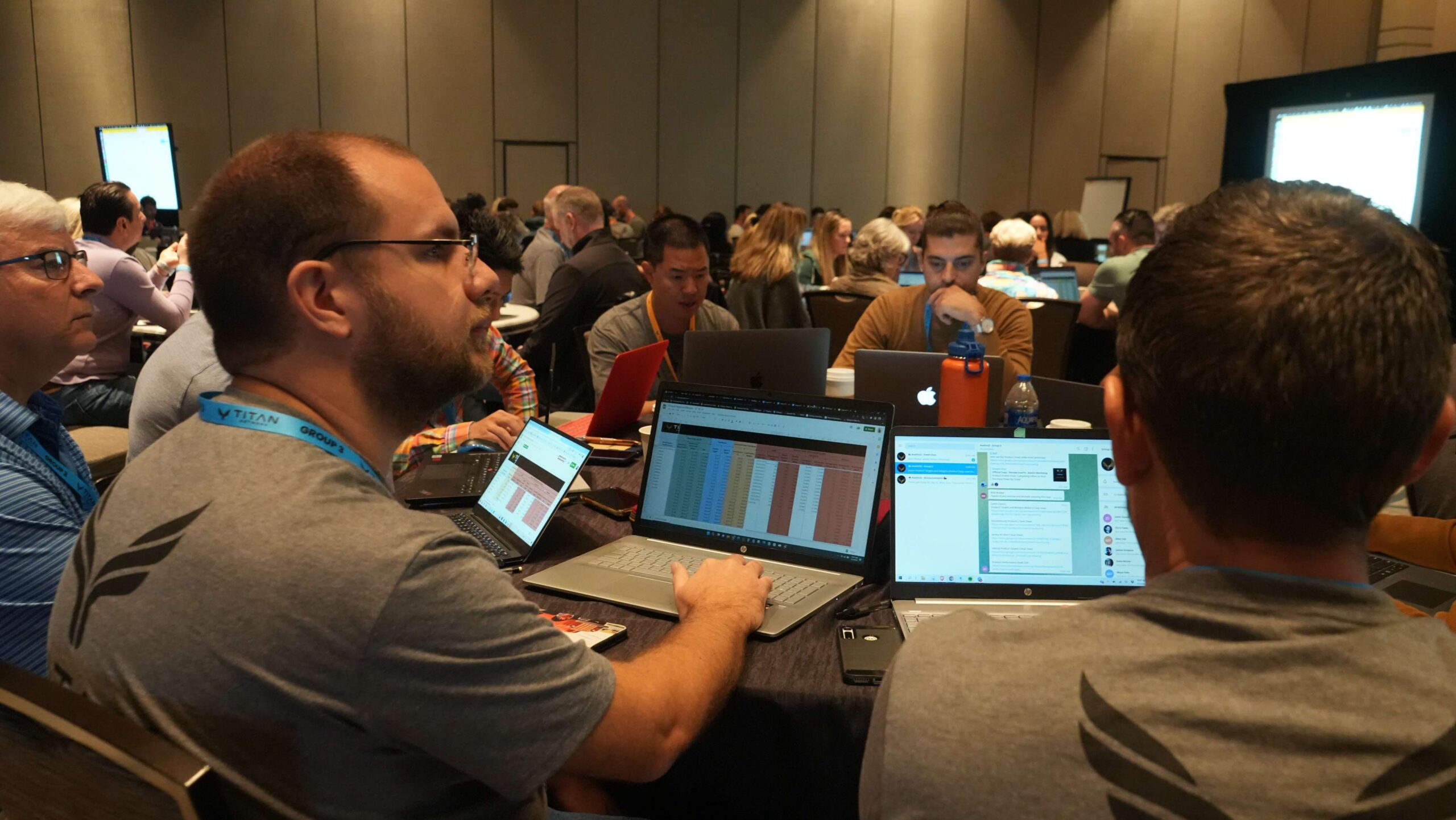
Alternatives to expensive Amazon growth seminars.
Expensive Amazon seminars rarely fail because information is unavailable. They fail because the ticket consumes working capital that should fund inventory, PPC testing, creative production, reviews, and customer acquisition. The better Alternatives to expensive Amazon growth seminars. put money into active execution, measurable experiments, and operator access rather than passive hotel lectures.
For a serious brand, education has value only when it changes a decision quickly. The standard is not how many slides a presenter covers. The standard is whether the investment improves contribution margin, reduces inventory risk, speeds up a launch, or creates a repeatable system across Amazon, TikTok Shop, Shopify, and AI discovery.
Stop Burning Cash: Smarter Alternatives to Expensive Amazon Growth Seminars
The $5,000 Seminar Trap: Why It’s Killing Your Runway
High-ticket Amazon masterclasses and seminars commonly charge $2,000 to $10,000 upfront. A $5,000 ticket can look reasonable beside a projected revenue target, yet the cash leaves before the brand has validated demand, secured replenishment, or established PPC efficiency. Sellers then face the predictable squeeze: fewer units for the first purchase order, less room for product samples, no reserve for listing photography, and limited budget for a PPC cold start.
The problem is not education itself. It is paying for generalized information while specific operational constraints remain unsolved. A seminar cannot inspect your ASIN indexing, diagnose search term waste, review supplier terms, or decide whether a slow category ramp reflects normal demand behavior. That distinction separates an information purchase from an execution resource.
What This Guide Covers: Your Capital Preservation Framework
This comparison treats every education expense as a capital allocation decision. Before paying for coaching, set aside the cash required for inventory, freight, inspection, packaging revisions, listing assets, Amazon fees, advertising, and a realistic testing window. Amazon Seller University offers more than 500 free modules covering marketplace policy, shipping guidance, and listing standards, according to Amazon. That makes basic platform education a poor reason to spend several thousand dollars.
The stronger path combines free fundamentals with paid access only where the bottleneck is expensive or time-sensitive. You may need feedback on retail readiness, catalog structure, creative testing, supplier negotiations, or channel expansion. Those needs call for current operator judgment and working sessions, not another static video library. The right alternatives preserve cash while moving a live business forward.
How We Evaluated Alternatives: Operator-Led Criteria
Use four tests. First, does the resource produce an action inside the next seven days? Second, can it address account-specific data such as TACoS, conversion rate, buy box behavior, inventory cover, and contribution margin? Third, does it support ownership of customer demand beyond Amazon? Fourth, can you measure the return through units ordered, profitable sessions, ranking movement, qualified leads, or reduced waste?
That framework favors active operator communities over broad promises. It also accounts for timing. Private-label products often need 60 to 90 days before organic velocity stabilizes, so any program promising immediate certainty deserves scrutiny. The goal is not to avoid every paid resource. It is to fund the resource that improves decisions during the ramp.
Operator rule: If a program cannot connect its cost to a defined decision, experiment, or operating improvement, keep the cash inside the business.
Your Capital Allocation Checklist: What $5,000 Really Buys

The Opportunity Cost: Inventory, PPC, and Vine vs. Hotel Lectures
A $5,000 seminar fee competes directly with the inputs that create marketplace evidence. That same pool could support a larger opening order, additional product samples, launch photography, keyword testing, or replenishment protection. Amazon Vine enrollment costs up to $200 per parent product, according to Amazon’s program information, so the ticket can also consume funds for early review generation. Reviews do not replace product quality, but they can support the conversion data needed to judge a launch.
Think in bottlenecks, not attractive spending categories. If stock is constrained, education will not fix lost sales. If traffic is weak, more inventory may sit idle. If conversion is poor, sending more clicks into a weak detail page increases waste. Working capital should fund the constraint with the clearest measurement path.
Minimum Viable Inventory Spend: How Much You Actually Need
There is no universal inventory number because landed cost, lead time, reorder points, category demand, and supplier minimums vary. Build a purchase-order model before committing to any seminar. Include unit cost, freight, duties, prep, inspection, storage, returns, and a reserve for a second production decision. A small test order can reduce exposure, but an order that cannot support meaningful conversion and replenishment data may produce false conclusions.
Preserve enough cash to survive the category ramp. Beauty, cosmetics, and competitive private-label products may move slowly while the listing earns relevance. A founder who spends the reserve on education can mistake a normal 60-to-90-day learning period for a failed product and make a premature catalog decision.
Essential PPC & Creative Budget: Fueling Growth, Not Gurus
Separate launch advertising from ongoing efficiency work. The first phase may require broad and exact match testing, branded and non-branded campaigns, placement review, search-term harvesting, and creative iteration. Budget also belongs in the assets that support conversion: product photography, comparison graphics, video, storefront structure, and mobile-first copy. Track spend against sessions, click-through rate, conversion rate, advertising cost of sales, TACoS, and contribution margin.
Beyond Amazon: Allocating for TikTok Shop, Shopify, and AI Tools
Amazon remains a core Titan channel, now positioned as The Cash Register: Amazon. The new direction keeps Amazon important but no longer the only focus. Reserve part of the budget for TikTok Shop content testing, Shopify conversion infrastructure, email capture, product feed quality, and AI-assisted research. The point is not to open every channel at once. It is to avoid paying for a seminar that leaves the brand dependent on one traffic source.
For founders comparing Alternatives to expensive Amazon growth seminars., the best allocation creates reusable operating assets: customer data, creative variants, supplier intelligence, marketplace documentation, and channel-specific performance benchmarks. Titan’s recommended anchor, The Cash Register: Amazon, fits that model when Amazon execution is tied to broader product, content, and demand systems rather than treated as the entire company.
Capital check: Fund the next measurable constraint first: sellable inventory, conversion assets, qualified traffic, or a channel experiment. Pay for education only after the operating reserve is protected.
Free & Low-Cost Foundations: Mastering the Essentials Without the Hype
For founders comparing Alternatives to expensive Amazon growth seminars., free education is the correct starting point for platform fundamentals. Amazon Seller University provides more than 500 free modules covering marketplace policy, shipping guidance, and listing standards, according to Amazon. YouTube can add practical demonstrations of catalog setup, keyword research, PPC structure, and inventory planning. These resources can protect working capital while a team learns the mechanics behind Seller Central.
Amazon Seller University & YouTube: The Unfiltered Truth
Free content is strong for definitions and standard workflows. A founder can learn how to create a listing, interpret fulfillment requirements, structure a product detail page, and understand basic advertising controls without paying a hotel seminar fee. The limitation is context. A video cannot inspect an account’s ASIN indexing, search-term waste, conversion rate, stranded inventory, or supplier constraints. It also may reflect an old Seller Central interface or tactics that no longer fit current auction costs.
Helium 10 Freedom Ticket & Similar Bundles: Value or Gimmick?
Software-bundled training can be useful when the subscription is already justified by keyword tracking, listing analysis, rank monitoring, or market research. The education then accompanies an operating tool rather than standing alone. The buying test is straightforward: would the brand keep the software if the lessons disappeared? If the answer is no, the bundle may be an expensive course with a dashboard attached. Compare renewal terms, data limits, team seats, export access, and whether the curriculum reflects current marketplace conditions before committing.
Operator Blogs & Forums: Genuine Insights from the Trenches
Operator blogs, seller forums, and category-specific communities expose the decisions that polished courses often skip: purchase-order timing, freight delays, review velocity, coupon economics, PPC cold starts, and the trade-off between margin and ranking. Read them as field notes, not instructions. A tactic that worked for a low-competition accessory may fail in beauty or cosmetics, where compliance, creative quality, and customer expectations change the economics. Separate firsthand operating detail from affiliate promotion, anonymous certainty, and revenue screenshots without unit-level context.
Choosing the Right Path: When Free Becomes Enough
Free material is enough when the bottleneck is knowledge of a standard process and the team can execute without outside review. Paid support earns consideration when the issue is account-specific, time-sensitive, or expensive to diagnose, such as a listing suppression, supplier quality dispute, launch forecast, or multi-channel allocation decision. The goal is not to collect courses. It is to close a defined operational gap while preserving cash for inventory, creative, advertising, and customer acquisition.
Free and Low-Cost Education: Practical Trade-Offs
Pros
- Protects cash for inventory, samples, PPC, and listing assets.
- Provides official policy and fulfillment guidance through Amazon Seller University.
- Supports self-paced research across catalog, sourcing, advertising, and conversion.
Cons
- Usually lacks account-level diagnosis and timely operator feedback.
- Quality, freshness, and commercial intent vary across videos and forums.
- Learning can continue without producing a measurable business decision.
The Operator Network Advantage: Real-Time Execution & Vetted Peers
The next step beyond free instruction is access to people who can work through a live constraint. An informational seminar transfers concepts. An operator network helps a team decide what to change in a catalog, campaign, supplier plan, or channel mix this week. That distinction matters for seven- and eight-figure brands, where a small pricing error, stockout, or inefficient campaign can affect contribution margin across a large revenue base.
Titan Network: The Omni-Channel Operating System
Best for: established ecommerce operators building coordinated growth across Amazon, TikTok Shop, Shopify, AI discovery, and product sourcing.
Titan Network is built around execution rather than passive consumption. Amazon remains a core Titan channel, now positioned as The Cash Register: Amazon. The new direction keeps Amazon important but no longer the only focus. The operating model connects marketplace performance with creative production, customer ownership, product development, supplier decisions, and channel economics. That gives a founder one room for decisions that otherwise become disconnected agency calls and isolated software reports.
Weekly Execution Rooms: Solving Live Catalog, PPC, and Supplier Issues
Best for: teams facing a specific operational roadblock that static training cannot diagnose.
Weekly execution rooms focus on the work in front of the operator: catalog errors, suppressed listings, search indexing, PPC structure, creative testing, inventory cover, vendor communication, and launch sequencing. Participants can bring actual constraints and leave with a next action, an owner, and a measurement point. The value is speed. A question about a low-converting ASIN or a delayed production run is useful only if it changes the decision before more budget or inventory is committed.
Vetted Operator Communities: Beyond Generic Masterminds
Best for: founders who need peer judgment grounded in operating experience, not broad motivational networking.
A useful peer group filters for relevance. Members should understand landed cost, reorder points, TACoS, contribution margin, creative fatigue, marketplace compliance, and the realities of category ramp time. Vetted participation also improves the quality of the discussion: a supplier problem can be compared with another operator’s procurement process, while a channel decision can be tested against actual customer acquisition and retention logic. The point is not social access. It is better decisions under commercial pressure.
The Titan AI Difference: Actionable Insights for Speed and Profit
Best for: operators who need faster research, clearer prioritization, and connected intelligence across channels.
Titan AI is positioned as an operating layer for turning market signals into action. It can support research around product demand, customer language, content opportunities, competitor movement, and channel questions, while operator judgment remains responsible for the final allocation decision. The standard is practical output: a better brief, a sharper test, a clearer product hypothesis, or a faster response to a marketplace change. AI should reduce research friction and decision latency, not generate more dashboards without ownership.
Membership vs. One-Off Seminar: A Strategic Comparison
A seminar is a single learning event. A membership is an ongoing decision system. Compare the two against the kind of work your brand must complete after the presentation ends.
| Criteria | One-Off Seminar | Titan Network Membership |
|---|---|---|
| Primary output | General education and presentation notes | Prioritized actions tied to live operating constraints |
| Feedback loop | Usually ends after the event | Recurring rooms, peer input, and continued review |
| Channel scope | Often centered on one marketplace | Amazon, TikTok Shop, Shopify, AI discovery, and sourcing |
| Decision context | Generic examples and broad frameworks | Catalog, PPC, inventory, creative, and supplier-specific discussion |
| Capital protection | Large upfront spend with limited follow-through | Ongoing access designed to improve allocation and execution |
Red Flags & Realistic Expectations: Navigating the Gurus

Spotting Predatory Coaching: “Guaranteed” Schemes and Outdated Tactics
Be cautious with any coach promising guaranteed revenue, fixed rankings, or a specific return without reviewing your category, landed cost, conversion rate, inventory position, and advertising economics. A seller in a low-competition niche does not face the same conditions as a beauty brand competing on crowded search terms. Ask for the assumptions behind every projection, including return rates, PPC costs, lead times, fees, and working-capital requirements. If the seller cannot explain the unit economics, the offer is built around confidence rather than evidence.
The Hype Cycle: Why Weekend Workshops Fizzle Out
Weekend events create momentum, not necessarily operating change. Attendees may leave with notes on keyword tools, listing structure, wholesale sourcing, or launch tactics, then return to a business with no assigned owner, test plan, or feedback loop. Static material also ages quickly as advertising auctions, catalog rules, and fulfillment policies change. The better test for Alternatives to expensive Amazon growth seminars. is whether support remains available after the presentation, when an ASIN fails to index, a supplier misses a ship date, or PPC data contradicts the original forecast.
Realistic Launch Timelines: Avoiding Premature Panic in Competitive Niches
Private-label launches commonly require 60 to 90 days before organic velocity stabilizes. That does not excuse weak execution, but it does make premature judgment dangerous. Review traffic quality, detail-page conversion, review accumulation, search-term movement, stock coverage, and contribution margin at planned checkpoints. A slow first month may call for better creative or offer testing, not an immediate product shutdown. Founders should distinguish a fixable launch constraint from a category that cannot support acceptable economics.
When High-Ticket Might Make Sense, and When It Never Does
A high-ticket program may earn consideration for an established brand facing a specialized problem, such as a complex retail expansion, major supply-chain transition, or account-level compliance issue. It should include defined deliverables, current operator access, transparent scope, and a measurement plan tied to profit or risk reduction. It rarely makes sense when the fee consumes the inventory reserve, replaces basic education available from Amazon, or depends on vague lifestyle promises. Protect capital first, then pay for expertise that solves a costly problem faster than the internal team can solve it.
Decision rule: Reject guarantees and demand assumptions, deliverables, ownership, and a measurable next step before signing any coaching agreement.
Conclusion: Building a Defensible Brand in the Modern Ecommerce Era
The Single-Channel Era Is Over: Embrace Cross-Channel Compounding
Amazon remains a core Titan channel, now positioned as The Cash Register: Amazon. The new direction keeps Amazon important but no longer the only focus. Shopify, TikTok Shop, customer data, product sourcing, and AI discovery should reinforce one another rather than operate as disconnected projects.
Your Next Move: Prioritizing Execution Over Exposition
The strongest Alternatives to expensive Amazon growth seminars. preserve working capital and create movement: a tested offer, cleaner catalog, better creative, tighter replenishment plan, or faster channel decision. Choose the resource that gives your team accountable execution, not another stack of notes.
Titan Network: Your Partner in Profit and Speed
Titan Network gives serious operators a working room for connected decisions across marketplace growth, content, AI research, suppliers, and owned demand. The Cash Register: Amazon remains part of that system, with execution tied to broader brand economics. For founders ready to replace passive lectures with active operating support, Titan is the next practical step.
Frequently Asked Questions
Is FBA still profitable in 2026?
Amazon FBA can still be profitable in 2026 when contribution margin, inventory turns, advertising efficiency, and cash flow support the model. Alternatives to expensive Amazon growth seminars prioritize live account reviews, controlled PPC tests, creative improvements, and channel expansion instead of spending working capital on broad presentations. Profit depends on execution, not the FBA label.
What is the best training course on Amazon?
The best Amazon training combines current platform fundamentals with account-specific operator feedback and measurable work. Amazon Seller University covers many core policies and processes at no cost, while a serious brand may need paid help with catalog decisions, PPC, creative, inventory, and margin. A strong program should produce a decision or test within seven days.
What are the best alternatives to expensive Amazon growth seminars?
Alternatives to expensive Amazon growth seminars include Amazon Seller University, focused operator communities, private working sessions, specialist audits, and hands-on internal testing. The strongest option depends on the bottleneck, such as inventory risk, weak conversion, wasted ad spend, or poor creative. Fund the resource that can improve a live business metric soon.
What is the best replacement for Amazon for a growing ecommerce brand?
Shopify is often the best replacement channel for owning customer relationships and increasing lifetime value, while TikTok Shop can support discovery and direct commerce. Amazon remains The Cash Register for demand and sales, so serious brands should build a connected system rather than abandon one channel. AI and AEO also affect how buyers discover products.
How can founders judge whether an Amazon coaching program is worth the cost?
An Amazon coaching program is worth the cost when its work connects to a defined decision, experiment, or operating improvement. Review whether the program can assess TACoS, conversion rate, inventory cover, contribution margin, creative, and channel economics using your data. Reject promises that focus on attendance, slide volume, or guaranteed revenue.
What do L3, L4, and L5 mean at Amazon, and do those roles matter to sellers?
L3, L4, and L5 are internal Amazon job levels that generally represent increasing responsibility, scope, and experience. Those titles matter less to sellers than the quality of operator access and the relevance of the advice to their own business. Founders should judge a mentor by recent execution, clear thinking, and measurable commercial results.