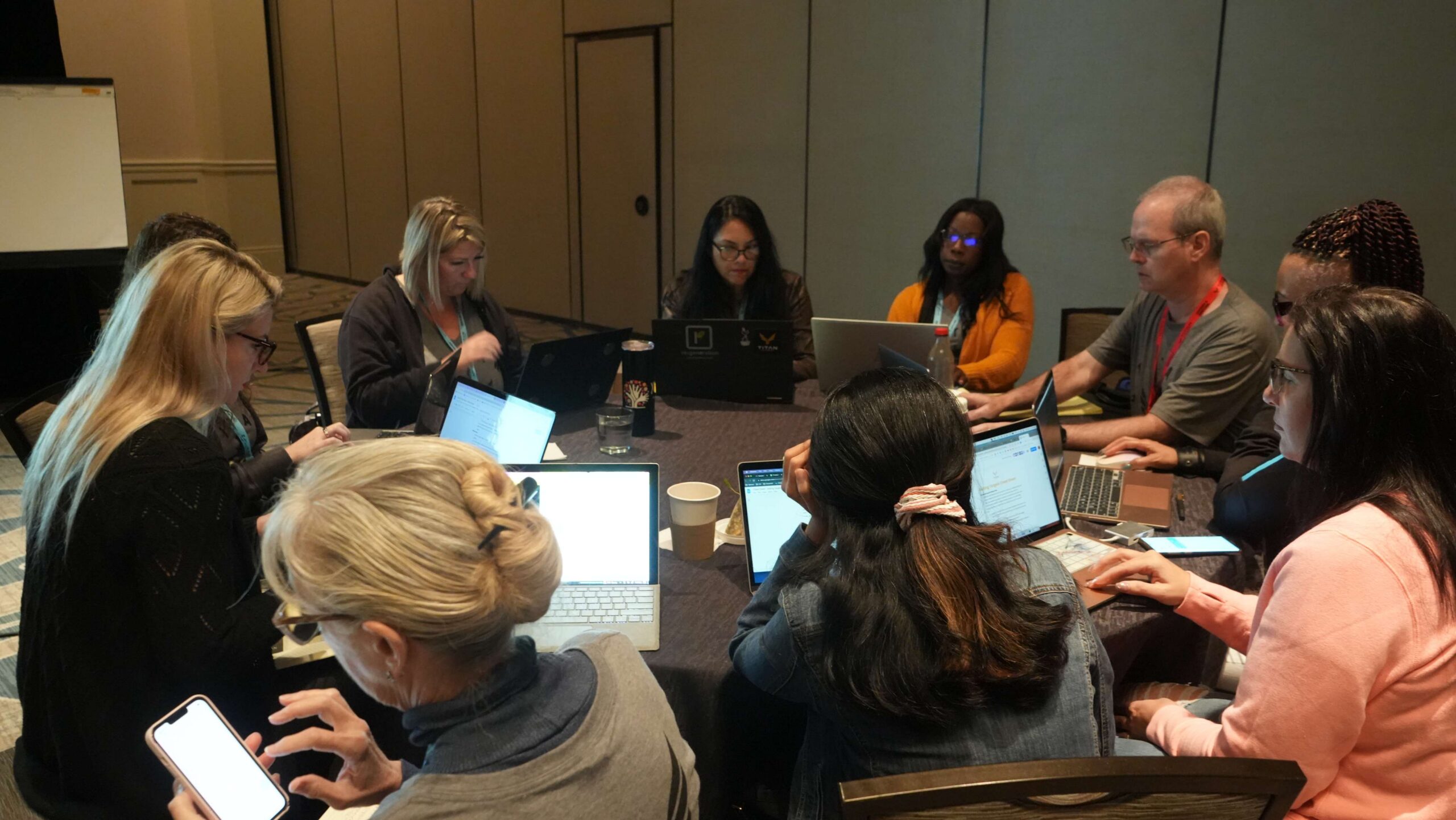
Recommended workshops for Amazon advertising mastery.
Recommended workshops for Amazon advertising mastery should be judged by account outcomes, not sales-page polish. Serious operators need diagnostic frameworks, live audits, and decisions tied to contribution margin, TACoS, inventory, and conversion rate. A video library can explain campaign types, but it cannot inspect why one product detail page is absorbing spend while another wins top-of-search traffic.
Key Takeaways
- Select Amazon advertising workshops based on demonstrated account results, not marketing flair.
- Prioritize training that provides diagnostic tools and live audits, connecting ad spend directly to contribution margin and TACoS.
- Mastering Amazon advertising means integrating it with your broader channel strategy to drive overall profit.
- Look for programs that teach you to analyze specific page performance issues, not just general campaign types.
This comparison favors programs that shorten the distance between instruction and execution. The strongest option combines Amazon PPC discipline with the operating context of Shopify, TikTok Shop, product sourcing, AI discovery, and customer ownership.
The Operator’s Dilemma: Why Most Amazon Ads ‘Courses’ Fail You
Most paid courses teach platform features without diagnosing the business. A lesson may explain broad, phrase, exact, auto, product targeting, negative keywords, bidding, and placement adjustments while leaving an operator unable to answer questions that determine profit: Is targeting wrong, or is the listing failing to convert? Is high ACoS acceptable during a ranking push? Are campaigns competing for the same query? Should budget move toward stronger contribution margin or greater organic potential?
That gap becomes expensive at scale. A large account may contain dozens of campaigns, multiple match types, branded and nonbranded search terms, product targets, sponsored products, sponsored brands, and sponsored display, while only a few produce profitable incremental sales. More than 70% of beginner accounts suffer from bid overlap, according to the account-structure problem documented in the research brief. Self-competition can inflate CPC and make reporting harder to trust. Free YouTube tutorials and Reddit threads may contain useful tactics, but building a coherent operating system can take weeks and costly testing.
Recommended workshops for Amazon advertising mastery should create an observable change in account behavior: review live data, identify the failure point, assign an action, and define the next measurement window. Amazon Advertising Academy is useful for platform terminology and official fundamentals, but it is not a substitute for an account audit, bidding system, or judgment built around a real catalog.
Vetting Framework: How to Spot Real Amazon Ads Mastery, Not Just Theory

Use a workshop scorecard before paying for access. Start with operating evidence. Can the program show how it handles a low-click campaign, a high-click low-conversion campaign, a profitable campaign constrained by budget, and a product with weak margin? These are different problems. Low clicks may point to relevance, keyword selection, bid level, or placement. Clicks without orders may indicate price, reviews, creative, detail-page content, offer quality, or traffic mismatch. A credible clinic teaches diagnosis before prescribing a bid change.
Workshop evaluation scorecard
- Live account access: Look for screen-shared audits, campaign exports, search-term reports, placement data, and real decision walkthroughs.
- Diagnostic sequence: The process should move from business goal to query, target, placement, click, conversion, margin, and inventory impact.
- Profit measurement: ACoS belongs in the report, but TACoS, contribution margin, blended ROAS, break-even ACoS, and new-to-brand behavior matter more for resource allocation.
- Account architecture: The workshop should explain campaign naming, budget ownership, match-type separation, negative targeting, harvesting, isolation, and bid governance.
- Placement economics: Top-of-search placements can command two to four times higher CPC than product detail pages, while conversion rates may reach up to 300% higher, according to Amazon Advertising research summarized in the brief. The lesson should explain when that trade makes economic sense.
- Organic connection: Targeted PPC and organic ranking should be evaluated across a 90-day cycle, rather than treated as separate scoreboards.
- Measurement depth: Advanced operators should gain a path toward Amazon Attribution, Amazon Marketing Cloud, incrementality, audience analysis, and retail-media reporting.
- Execution cadence: The program should specify weekly reviews, search-term mining, budget shifts, listing tests, query exclusions, and post-change observation periods.
Ask what you receive after the session. A recording alone is weak. Better deliverables include an annotated account map, prioritized issue list, decision log, testing calendar, KPI definitions, and a clear owner for each change. Inspect the refund policy, access period, support channel, cohort size, and whether the instructor reviews participant data. High membership fees are difficult to justify when the only output is more content.
Recommended workshops for Amazon advertising mastery should disclose limits. No program can promise a fixed ACoS, sales lift, ranking outcome, or margin improvement without knowing category demand, retail price, competition, reviews, supply, and conversion assets. Unsupported revenue promises are a warning sign. The right workshop makes trade-offs visible and provides a repeatable way to make the next decision.
Top Amazon Advertising Workshops: Vetted Programs & Live Execution
The shortlist below separates foundation, execution, and peer problem-solving. Free certification supports platform literacy. Live clinics help resolve account decisions. A premium operator room connects advertising actions to the wider commerce system.
| Program type | Primary use | Hands-on depth | Best fit | Main limitation |
|---|---|---|---|---|
| Titan Network Execution Rooms | Live audits and cross-channel operating decisions | Real-time diagnosis, account review, execution routines | Established brands that need faster, profit-aware decisions | Requires active participation and usable account data |
| Amazon Ads Academy | Official platform education and certifications | Structured learning, not individualized account work | New team members and operators establishing terminology | Does not replace live troubleshooting or business-specific judgment |
| Independent live clinics and peer networks | Account discussion, accountability, and tactical review | Varies by facilitator, cohort, and access to live data | Operators who benefit from outside patterns and shared problems | Quality and confidentiality standards require careful screening |
Titan Network Execution Rooms: Real-Time Account Audits & Cross-Channel Compounding
Best for: 7 and 8 figure ecommerce brands that need an operating room, not another content library.
Titan Network ranks first because the work starts with execution. An audit should ask whether spend produces profitable demand, supports organic rank, protects inventory turns, and creates learning that transfers to Shopify, TikTok Shop, creative testing, and AI discovery. A live review can expose bid overlap, wasted search terms, budget bottlenecks, weak detail-page conversion, and mismatched targets in one session.
The Cash Register: Amazon remains a core Titan channel, now positioned as The Cash Register. The new direction keeps Amazon important but no longer the only focus. A campaign decision should account for retail velocity, customer acquisition, catalog economics, creative reuse, and the destination where the customer relationship develops.
Amazon Ads Academy: The Foundational Layer
Best for: New hires, agency-side team members, and operators who need official terminology before working inside a larger account.
Amazon Ads Academy, the official education resource from Amazon Advertising, is a sensible starting point for sponsored ads concepts, ad products, certification preparation, and platform vocabulary. Its advantage is proximity to Amazon’s own advertising documentation. It helps teams understand campaign settings and basic measurement without paying for third-party training.
Pros
- Official platform education and structured certification content
- Useful foundation for campaign terminology and ad-product orientation
- Accessible starting point for internal team training
Cons
- Limited individualized diagnosis of a live catalog
- Does not establish a complete profit, margin, or inventory decision system
- Operators still need practice with search-term analysis and account restructuring
Advanced Live Clinics & Peer Networks: Shared Troubleshooting
Best for: Experienced operators who want external pattern recognition, accountability, and discussion around difficult account conditions.
Independent live clinics and carefully screened peer networks can fill the gap between certification and full operator support. Their value comes from working through actual questions: whether to isolate a converting query, set a break-even bid, interpret placement reports, or test a listing before raising traffic. A strong facilitator asks for context rather than prescribing a universal rule. Cohort discussion can reveal category patterns involving seasonality, retail readiness, review velocity, and competitor pricing.
Quality varies, so screen for confidentiality, facilitator experience, session format, data-sharing rules, and post-call accountability. A room that only broadcasts slides is still a course. A room that reviews anonymized exports, challenges assumptions, documents decisions, and revisits outcomes is closer to an execution clinic. Recommended workshops for Amazon advertising mastery should reduce time to a sound decision, not merely increase the material in a training folder.
Beyond Amazon: Integrating Ads into a Modern Omni-Channel OS
Amazon advertising works harder when managed as one input into a broader commerce system. The Cash Register: Amazon remains a core Titan channel, now positioned as The Cash Register. The new direction keeps Amazon important but no longer the only focus. Product strategy, TikTok Shop content, AI and AEO discovery, Amazon demand capture, and Shopify customer ownership should inform one another instead of operating separately.
The operating question is not only whether a sponsored campaign produces an order. It is whether search-term data improves product positioning, winning creative can move into TikTok Shop, Amazon conversion insights strengthen a Shopify landing page, and customer questions reveal prompts for AI discovery. Amazon provides fast demand feedback, while Shopify supports first-party customer data and retention. TikTok Shop can test creator-led demonstrations. Product sourcing and inventory planning can use those signals to decide which offers deserve more capital.
That is the role of The Cash Register: Amazon inside Titan Network. It is not a reason to preserve Amazon-only growth. It is the cash-generating layer that can fund testing across the rest of the system. A rising Amazon query can guide a product-page refresh, creator brief, retail offer, or AI-search answer. Weak conversion can signal a pricing, packaging, review, or message problem that paid traffic cannot fix. The best workshop teaches operators to trace signals across channels and allocate time and capital according to profit, speed, and defensibility.
Your Next Steps: Implementing Diagnostic Frameworks & Execution Routines

Turn workshop material into a repeatable rhythm within one week. Start with a fixed account snapshot: spend, sales, orders, clicks, CPC, conversion rate, ACoS, TACoS, contribution margin, inventory coverage, and organic rank for priority terms. Segment the review by SKU, campaign type, match type, placement, search term, and customer intent so a profitable branded campaign does not mask nonbranded waste.
Use this decision sequence
- Low impressions: Check relevance, eligibility, bid level, budget, indexing, and retail readiness.
- Impressions but few clicks: Review search-term fit, placement, main image, price, title, and competitive offer quality.
- Clicks but few orders: Inspect detail-page conversion, reviews, variation structure, content, price, shipping promise, and traffic intent before raising bids.
- Orders at weak economics: Calculate break-even ACoS from contribution margin, then reduce bids, add negatives, isolate winners, or revise the offer.
- Profitable but budget-limited: Protect high-intent placements, confirm inventory depth, and shift spend from weaker targets only after checking incremental sales.
Run a weekly search-term and placement review, a biweekly listing and offer review, and a monthly budget allocation review. Log every change with its reason, owner, expected signal, and observation window. Compare advertising results with organic sales, inventory turns, blended acquisition cost, and contribution margin. The objective is faster identification of the constraint limiting profitable growth.
Frequently Asked Questions for Serious Amazon Ads Operators
Are paid Amazon advertising workshops worth the investment?
They can be worthwhile when the program reviews live data, produces a prioritized action plan, and shortens testing time. Free tutorials help with terminology and basic settings, but rarely diagnose a catalog, margin structure, inventory position, or targeting conflict. Compare the fee with unmanaged spend, delayed decisions, and the labor needed to organize fragmented advice.
What is the difference between a live workshop and an on-demand course?
An on-demand course delivers fixed lessons. A live execution workshop examines account evidence, challenges assumptions, and assigns actions against a measurement window. Live instruction is most valuable when the operator has real campaigns, search-term data, listing constraints, and a decision requiring judgment.
Do advanced workshops cover Amazon Attribution and Amazon Marketing Cloud?
Some do, but confirm the curriculum first. A serious program should explain attribution boundaries, audience analysis, incrementality, data requirements, and how those tools inform budget decisions. Tool demonstrations without a measurement question rarely improve account economics.
How can operators avoid generic course scams?
Request the instructor’s audit process, sample deliverables, support terms, refund policy, and evidence of hands-on account review. Avoid fixed revenue promises and programs that measure success only through ACoS. A credible provider makes assumptions, limitations, testing rules, and follow-through ownership explicit.
Frequently Asked Questions
How can I learn Amazon advertising effectively?
Learning Amazon advertising effectively requires a workshop that connects search-term data, bids, placements, conversion rate, margin, and inventory. Recommended programs should include live account audits, campaign structure reviews, and a decision log for each change. Free certification can teach platform basics, but real account judgment comes from reviewing data and measuring results after execution.
Is Amazon Ads certification worth it?
Amazon Ads certification is worth it for learning platform terminology, campaign types, and official advertising fundamentals. Certification alone does not teach account diagnosis, contribution margin decisions, bid governance, or listing conversion analysis. Serious operators should pair certification with live workshops that review real campaign data and connect Amazon performance to broader channel economics.
What are the best Amazon FBA training courses?
The best Amazon FBA training courses teach profitable operations, not just product sourcing or campaign setup. Look for live audits, inventory planning, contribution margin analysis, listing conversion work, search-term mining, and weekly execution routines. A strong program also explains how Amazon fits with Shopify customer ownership, TikTok Shop growth, and AI-driven discovery.
What are the best courses for learning Amazon advertising?
The best Amazon advertising courses combine platform instruction with live execution and profit-based measurement. Programs should cover campaign architecture, negative targeting, placement economics, TACoS, break-even ACoS, organic ranking, and conversion diagnosis. Recorded lessons help with fundamentals, while account reviews and testing calendars build the operating habits that improve decisions.
What should I look for in an Amazon advertising workshop?
A strong Amazon advertising workshop should provide live account access, a diagnostic process, measurable deliverables, and support after the session. Look for annotated campaign maps, prioritized issues, KPI definitions, testing windows, and clear ownership for each action. The instructor should explain whether weak performance comes from targeting, bids, traffic quality, listing content, offer strength, or margin.
What are the top three types of Amazon advertising training?
The top three types of Amazon advertising training are platform fundamentals, live account clinics, and operator communities. Fundamentals build terminology and campaign knowledge, clinics solve current account problems, and communities support recurring reviews and peer decisions. For established brands, the strongest path connects Amazon, Shopify customer ownership, TikTok Shop, and AI discovery instead of treating Amazon as the whole business.