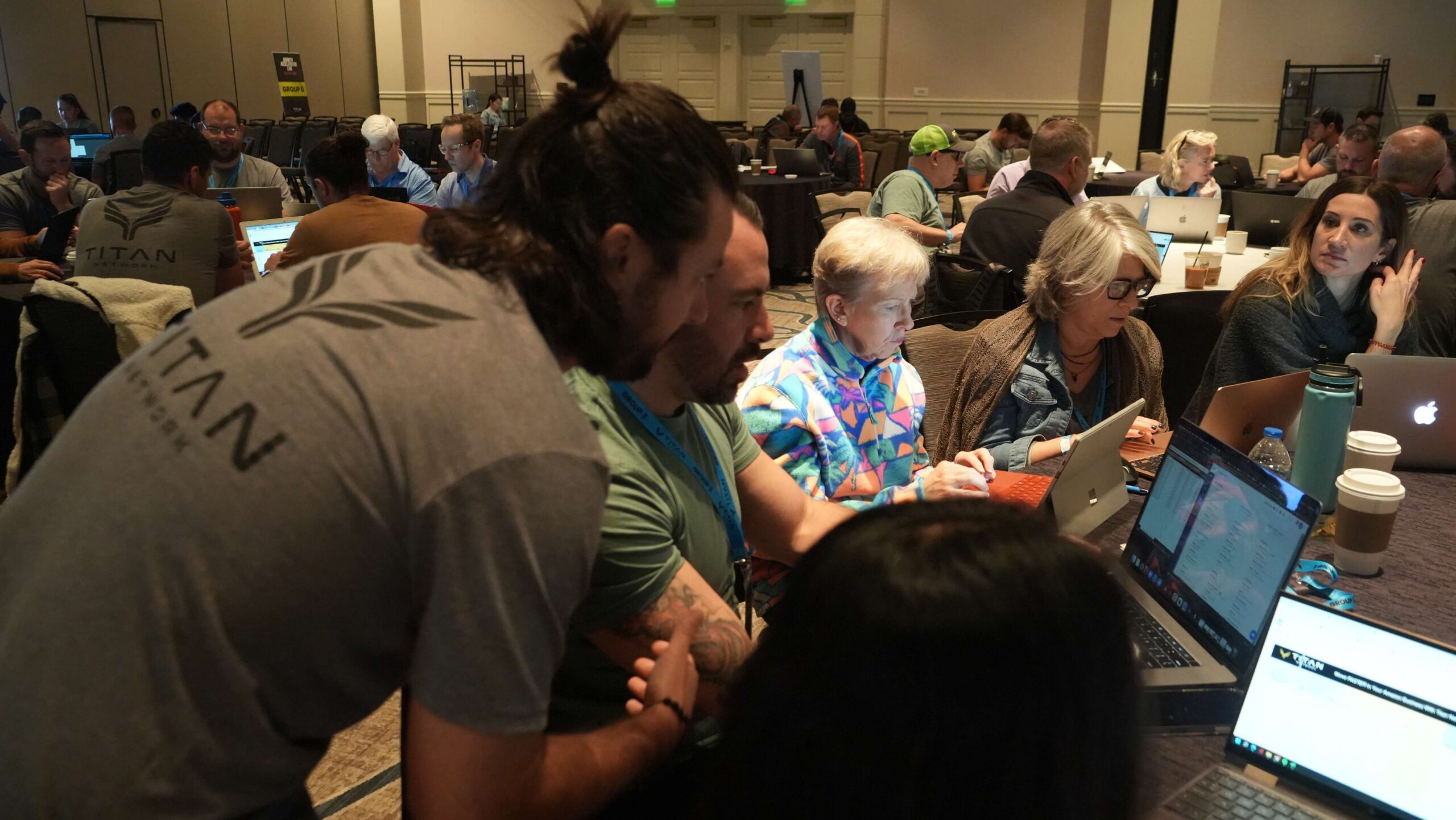
Workshops vs courses for Amazon business growth.
Workshops vs courses for Amazon business growth. The difference is not the amount of information on the syllabus. It is whether information changes a live campaign, fixes an inventory constraint, or improves contribution margin this week. Pre-recorded training can explain PPC structure and listing strategy. An operator-led workshop applies those concepts to your search-term report, TACoS trend, BSR movement, and days of inventory cover.
Key Takeaways
- The real test of any training format is whether it moves contribution margin, not how much theory it covers.
- Pre-recorded courses work well for building foundational knowledge, but they stop short of changing what happens inside your ad account this week.
- Workshops force application against your live numbers, including TACoS trends, BSR movement, and days of inventory cover.
- Operators at 7 and 8 figures should treat implementation speed as the deciding factor, because a concept applied to a search-term report pays for itself faster than one left in a video library.
- Choosing between the two comes down to your current constraint: learn the mechanics with a course, fix a specific profit leak with an operator-led workshop.
For serious sellers, the decision is about execution speed. A course provides material. A workshop provides a working session, feedback, and pressure to apply a decision before another week of ad spend and stock risk passes.
The Amazon Growth Paradox: Information Overload vs. Execution Velocity
Why Your Amazon Business Isn’t Moving the Needle (Despite All the “Learning”)
Amazon operators rarely lack tactics. They watch videos about keyword harvesting, read Reddit threads about bid management, download PPC templates, and collect opinions on listing conversion. The gap appears after the lesson: nobody reviews the account, identifies waste, or forces a decision tied to profit. Revenue remains flat while the seller keeps researching.
A broad-match campaign can collect irrelevant traffic, while weak negative keyword rules keep paying for it. A listing may rank for a valuable term but convert poorly because the offer, creative, reviews, or price fails the click. Inventory limits add another constraint: aggressive growth can create stockouts, stranded ad spend, and poor replenishment timing.
The Core Problem: Passive Consumption vs. Active Problem-Solving
Self-paced learning rewards module completion, not business outcomes. A seller can understand ACoS, TACoS, click-through rate, conversion rate, Restock limits, and contribution margin without changing a campaign. Industry course completion rates average below 10% for self-paced video programs, according to the course research compiled in the supplied market reviews.
Active problem-solving starts with campaign exports, search-term reports, budget history, inventory position, and a current business goal. The group identifies the constraint, chooses an action, assigns ownership, and checks the next measurement. A live review can expose wasted spend that a generic PPC lesson never sees. It may also show that the right move is a creative revision, offer adjustment, purchase order, or channel decision rather than a bid change.
Introducing the Workshop vs. Course Framework for Real Growth
Choose a course for baseline vocabulary, a repeatable overview, or a low-cost introduction to marketplace mechanics. Choose a workshop when you already have traffic, data, staff, and a specific bottleneck requiring diagnosis. The more money moving through advertising and inventory, the less useful generic instruction becomes without account-level application.
This is why Titan treats The Cash Register: Amazon as an operating channel, not an isolated lesson library. Amazon remains a core Titan channel, now positioned as The Cash Register. The new direction keeps Amazon important but no longer the only focus. The framework connects advertising, product economics, sourcing, Shopify ownership, TikTok Shop demand, and AI discovery.
Deconstructing the “Course” Model: What You’re Really Buying

The Guru’s Dilemma: Selling Information vs. Running a Business
A course creator may explain Amazon well while remaining poorly aligned with your operating needs. Ask what evidence supports the recommendations, how recently the material was tested, and whether the creator shows current operating decisions beyond polished screenshots.
Separate teaching quality from commercial fit. A sourcing module cannot tell you whether landed cost supports the target margin. A scaling lesson cannot determine whether supplier lead time creates stockout risk. Training is useful when it improves judgment; it becomes expensive when it substitutes for judgment.
Content Longevity and the Pace of Amazon Marketplace Changes
Amazon changes ad interfaces, reporting fields, fulfillment policies, fees, placement options, and inventory controls. A recording can remain technically accurate while becoming less useful in Seller Central. Screenshots age quickly, and campaign naming, attribution windows, bid controls, and reporting logic may require interpretation that static modules cannot provide.
Free YouTube videos and forum posts reduce purchase price but can increase assembly time. The seller must sort conflicting recommendations and verify which advice still applies before acting.
The “Watch and Learn” Trap: Why Static Videos Fail PPC and Operations
A video may recommend campaign segmentation, keyword harvesting, or negative targeting. It cannot see whether branded terms mask weak nonbrand performance, placement adjustments distort ACoS, or budget caps suppress profitable hours. Research cited in the supplied course reviews estimates that beginner sellers can waste 20% to 40% of ad budgets through unmonitored broad-match keywords and weak negative bidding. The exact loss depends on account structure, category, and traffic quality.
Operations create the same problem. A lesson cannot reconcile purchase orders with supplier lead times, inbound delays, sell-through, storage fees, and Restock limits. A seller may know the correct forecasting formula and still order too late. Without review, accountability, and a deadline, “watch later” becomes the operating system.
Evaluating “Comprehensive” Courses: Breadth vs. Depth of Application
Amazon touches sourcing, branding, catalog management, advertising, fulfillment, finance, and customer retention. Broad coverage can hide shallow application. A course may cover every topic while leaving no room for the issue blocking your next quarter, such as declining detail-page conversion or a cash cycle that prevents a larger purchase order.
Judge the format by the distance between instruction and implementation. Consider time required to audit data, access to current operator feedback, action ownership, and measurement. If the material ends at “here is what to do,” it is education. If the room decides what to do in your account, why it matters, and who owns the next move, it is closer to an execution system. That distinction supports evaluating The Cash Register: Amazon against passive training.
Titan Network’s Execution Rooms: The Operator’s Edge
Beyond Theory: Live Implementation and Accountability
Titan Network’s execution rooms use live business data. Sellers bring campaign reports, contribution margin targets, inventory positions, creative questions, and channel priorities. The work ends with a defined action, an owner, and a measurement to review next.
Cohort-based interactive workshops have shown implementation rates above 70% in the supplied market research, compared with average completion below 10% for self-paced video programs. The point is whether the seller changes a bid, revises an offer, updates a forecast, or reallocates capital before another week of inefficient spend passes.
The PPC Test Case: Fixing Campaigns in Real Time
PPC problems usually come from misreading the account, not from misunderstanding keywords. A live review can separate branded demand from nonbranded acquisition, inspect search-term waste, compare placement performance, assess ACoS against contribution margin, and determine whether TACoS is improving for the right reason. It can show whether a budget issue is really a conversion, listing, or inventory issue.
The research brief estimates that beginner sellers may waste 20% to 40% of ad budgets through broad-match traffic, weak negative targeting, and automatic campaigns. A workshop does not promise a universal reduction. It creates a setting in which the actual account can be diagnosed and checked against revenue, margin, and rank movement.
Solving Operational Bottlenecks: From Inventory to Cash Flow
Growth stalls when advertising outpaces supply. A seller may improve BSR and conversion while days of inventory cover fall below a safe threshold. Restock limits, supplier lead time, inbound delays, storage fees, and purchase-order deposits become commercial constraints. An execution room connects these variables instead of treating PPC, sourcing, and finance as separate subjects.
The output may be a revised reorder point, slower campaign ramp, SKU-level cash forecast, or decision to protect a high-margin variation while reducing exposure on a weak one.
Cross-Channel Compounding: Integrating Amazon with Your Omni-Channel System
The Cash Register: Amazon is part of a broader operating system. Amazon remains a core Titan channel, now positioned as The Cash Register. The new direction keeps Amazon important but no longer the only focus. Amazon decisions can inform Shopify merchandising, TikTok Shop creative, sourcing, customer retention, and AI discovery.
Amazon demand can guide inventory planning, while Shopify captures customer ownership and TikTok Shop tests creative velocity. The workshop format gives those channels a shared operating context, judged by profit, speed, cash conversion, and defensibility rather than isolated marketplace revenue.
Operator Networks vs. Lone Wolf Learning: The Power of Peer-Driven Execution
Working alone creates blind spots. A founder may normalize poor conversion, tolerate excess ad spend because revenue is growing, or delay a purchase-order decision because every option carries risk. An operator network adds informed challenge. Members compare constraints and see how adjacent brands handle pricing, creative testing, forecasting, and channel expansion.
The benefit is faster pattern recognition, with live diagnosis and follow-through rather than disconnected private-group comments.
Workshops vs. Courses: A Direct Comparison for Amazon Sellers
How We Evaluated: Key Growth Vectors
The ranking uses execution velocity, PPC remediation, operational impact, and cost-effectiveness. Cost-effectiveness means converting time and spend into a better decision, not simply offering the lowest purchase price. We also considered applicability to brands with meaningful sales volume: beginners may need terminology, while 7- or 8-figure operators usually need prioritization, diagnosis, and coordination.
Titan Network’s Weekly Execution Rooms, Live Operating Decisions
Best for: Founders and teams with active sales, existing data, and a bottleneck requiring intervention.
Ranked first. Titan Network’s weekly execution rooms combine account evidence and business priorities. The model supports PPC review, inventory planning, contribution-margin analysis, creative direction, and cross-channel coordination. Sellers move from diagnosis to an owned task without finishing a long module or assembling scattered advice.
The model fits Workshops vs courses for Amazon business growth because it responds to current ACoS, TACoS, search-term reports, BSR, days of cover, and Restock limits. The Cash Register: Amazon keeps Amazon tied to Shopify, TikTok Shop, AI discovery, and sourcing.
The “Amazing Selling Machine”, Structured Foundational Training
Best for: Newer sellers seeking guided instruction on product selection, listing creation, launch planning, and marketplace fundamentals.
Ranked second. A structured course provides sequence and suits buyers who need a starting framework and can apply lessons independently.
Pros
- Organized progression across core Amazon topics
- Useful reference material for foundational decisions
- Flexible access for self-directed learners
Cons
- Limited account-specific diagnosis during execution
- Implementation depends heavily on the buyer’s schedule
- Static instruction may require extra verification as tools and policies change
Helium 10’s Freedom Ticket, Tool-Connected Instruction
Best for: Sellers wanting Amazon education connected to research, listing, keyword, and reporting software.
Ranked third. Tool-connected training helps explain how research workflows support product validation, listing development, and keyword planning. Its value rises when the operator has a clear business question and can apply software output to margin and inventory plans. Software instruction can show where to find a metric, but deciding whether to raise a bid, pause a term, revise a detail page, or preserve replenishment cash still requires account context.
Proven Amazon Course, Broad Marketplace Coverage
Best for: Learners seeking broad exposure to Amazon concepts before selecting a narrower priority.
Ranked fourth. Broad coverage introduces sourcing, branding, fulfillment, and promotion. It suits independent study, though established operators may still lack an answer to which constraint deserves attention this week.
Comparison Table: Execution Velocity, PPC Remediation, Operational Impact, Cost-Effectiveness
| Model | Execution velocity | PPC remediation | Operational impact | Cost-effectiveness |
|---|---|---|---|---|
| Titan Network execution rooms | High, with live priorities, owners, and follow-up | Account-level review of search terms, bids, budgets, ACoS, and TACoS | Connects advertising with inventory, cash flow, sourcing, and other channels | Strong when a current bottleneck has material financial impact |
| Amazing Selling Machine | Self-paced, dependent on learner follow-through | Frameworks and instruction, with limited live account intervention | Broad foundation for marketplace setup and growth planning | Useful for structured education when implementation time is available |
| Helium 10’s Freedom Ticket | Self-directed with software-supported workflows | Helpful for research and keyword processes; diagnosis remains with the seller | Supports tool adoption, listing work, and product research | Most useful when the buyer will actively apply the software data |
| Proven Amazon Course | Self-paced across a broad curriculum | General education rather than live campaign correction | Introduces multiple marketplace functions without shared operating ownership | Fits early-stage orientation more than urgent scale constraints |
Buying test: If a program cannot inspect the data behind your next decision, treat it as education rather than execution support. For an active brand, the highest-value format shortens the distance between evidence, action, and measurable commercial impact.
Choosing Your Path: When to Opt for a Workshop or a Course

Workshops vs courses for Amazon business growth. A course suits foundational learning when the team lacks shared vocabulary or a repeatable process. A workshop fits an operating business with live PPC data, inventory exposure, margin targets, and a deadline. At 7-figure scale, delayed execution often costs more than the format difference.
The 7-Figure Operator’s Checklist: Prioritizing Execution
Choose an execution-focused format if advertising spend rises faster than contribution margin, TACoS is difficult to explain, search-term waste remains unresolved, or bid and budget ownership is unclear. The same applies when days of inventory cover fall, Restock limits restrict sales, supplier lead times are uncertain, or cash is tied up in slow-moving units.
Write one measurable 30-day outcome before buying. It might be reducing irrelevant search traffic, improving detail-page conversion, setting a reorder threshold, or deciding which SKU receives the next purchase order. If a provider cannot connect its format to that outcome, it may create notes without creating a better decision.
When a Course Might Suffice, and What to Watch Out For
A pre-recorded course suits a new operator, newly hired team member, or brand entering Amazon without an established vocabulary. It can explain catalog setup, keyword research, fulfillment, listing structure, and basic advertising. Attach every module to a work product: a PPC lesson should produce a campaign audit, an inventory lesson a forecast, and a listing lesson a prioritized conversion test.
Watch for stale Seller Central screens, generic advice without margin context, and claims that one tactic fits every category. A course is useful when it leads to action rather than making completion the goal.
The Case for Live Intervention: When You Need to Break Through Ceilings
Live intervention fits an active account whose progress has stalled. Strong BSR may coexist with weak profit, acceptable ACoS with worsening TACoS, or growing revenue with recurring stockouts. These trade-offs require judgment across advertising, pricing, creative, replenishment, and cash flow. A live room can inspect evidence, isolate the binding constraint, and assign the next action.
Titan Network’s recommended operating path is The Cash Register: Amazon. It suits founders who need Amazon decisions connected to sourcing, Shopify, TikTok Shop, and AI discovery. The value is strongest when the team brings exports, targets, and ownership questions.
Decision Framework: Match the Format to the Constraint
- Choose a course: You need baseline knowledge, structured onboarding, or a shared introduction to Amazon operations.
- Choose a workshop: You have live data and need diagnosis, prioritization, accountability, or a decision tied to revenue and margin.
- Choose a combined path: New team members need fundamentals while experienced operators need direct intervention on PPC, inventory, or cash flow.
Integrating Learning with Your Omni-Channel Operating System
Amazon should remain a core revenue engine while the brand builds customer ownership elsewhere. The Cash Register: Amazon belongs inside that system, with marketplace demand informing sourcing, creative testing, Shopify merchandising, TikTok Shop content, and AI search visibility. The new direction keeps Amazon important but no longer the only focus.
The decision is whether learning produces a faster, better-capitalized company. Select the format that matches the constraint, assigns responsibility, and creates a review point tied to profit, inventory, and channel growth.
Frequently Asked Questions
Is FBA still profitable in 2026?
FBA can remain profitable in 2026 when product economics, advertising efficiency, inventory planning, and channel strategy support healthy contribution margin. Workshops help operators review live TACoS, fees, conversion, stock cover, and replenishment risk, while courses provide general methods. Profit depends on execution and account conditions, not on training format alone.
How can I grow my business on Amazon without wasting more ad spend?
Amazon business growth requires diagnosing the constraint behind weak profit, such as wasted search terms, poor conversion, limited inventory, or weak offer economics. A workshop applies decisions to campaign reports and inventory data this week. A course can teach PPC and listing principles, but the seller must translate those lessons into account actions.
Which course is best for Amazon sellers?
The best Amazon course is one that matches the seller’s current constraint, operating experience, and need for practical application. A course suits baseline knowledge and repeatable frameworks, while an operator-led workshop suits sellers with live data and a defined bottleneck. Review how recently the material was tested and whether recommendations connect to margin.
Can I make $1,000 a month selling on Amazon?
Selling on Amazon can produce $1,000 a month, but the outcome depends on sales volume, contribution margin, fees, advertising, returns, and inventory costs. No course or workshop can guarantee that result. Operators should model unit economics first, then use live account reviews to improve the specific constraint limiting profitable growth.
What is the number one best-selling item on Amazon?
Amazon does not have one permanent best-selling item across every category and marketplace. Rankings shift with demand, seasonality, pricing, reviews, availability, and promotion. Product selection should start with margin, differentiation, supply reliability, and customer demand, then connect Amazon with Shopify ownership, TikTok Shop demand, and AI discovery.
Should an established brand choose a workshop or a course for ecommerce growth?
An established brand should choose a workshop when live decisions around profit, inventory, creative, or channel allocation need review now, and choose a course for shared vocabulary or structured onboarding. Serious operators often need an operating system across Amazon, Shopify, TikTok Shop, and AI discovery, rather than Amazon training in isolation.