Key Takeaways
- Partnering with 3PL logistics providers offers financial benefits beyond cost savings.
- Elite Amazon sellers achieve measurable EBITDA growth through effective 3PL partnerships.
- Accelerated cash flow cycles are a key advantage of working with 3PL providers.
- Operational leverage from 3PL partnerships creates bandwidth for strategic growth.
- Tracking the right metrics and structuring partnerships properly compounds financial benefits over time.
Table of Contents
- The Strategic Role of 3PL Logistics Providers in Scaling Established Amazon Brands
- The Full Suite—Core and Advanced Services Elite 3PLs Provide
- 3PL ROI—Where the Real Profits and Cash Flow Advantages Emerge
- 3PL vs. Other Logistics Models—Cutting the Confusion on Who Should Own What
- How 3PLs Integrate with Amazon and Other E-Commerce Channels—The Reality for $1M+ Sellers
- Evaluating, Negotiating & Maximizing a 3PL Relationship
The Strategic Role of 3PL Logistics Providers in Scaling Established Amazon Brands
The logistics squeeze is real. Amazon’s capacity limits, rising FBA fees, and multichannel expansion demands are forcing established sellers into a critical decision: scale operations internally or partner strategically. Most $5M+ brands discover that 3pl logistics providers unlock hidden EBITDA while positioning them for true omnichannel growth.
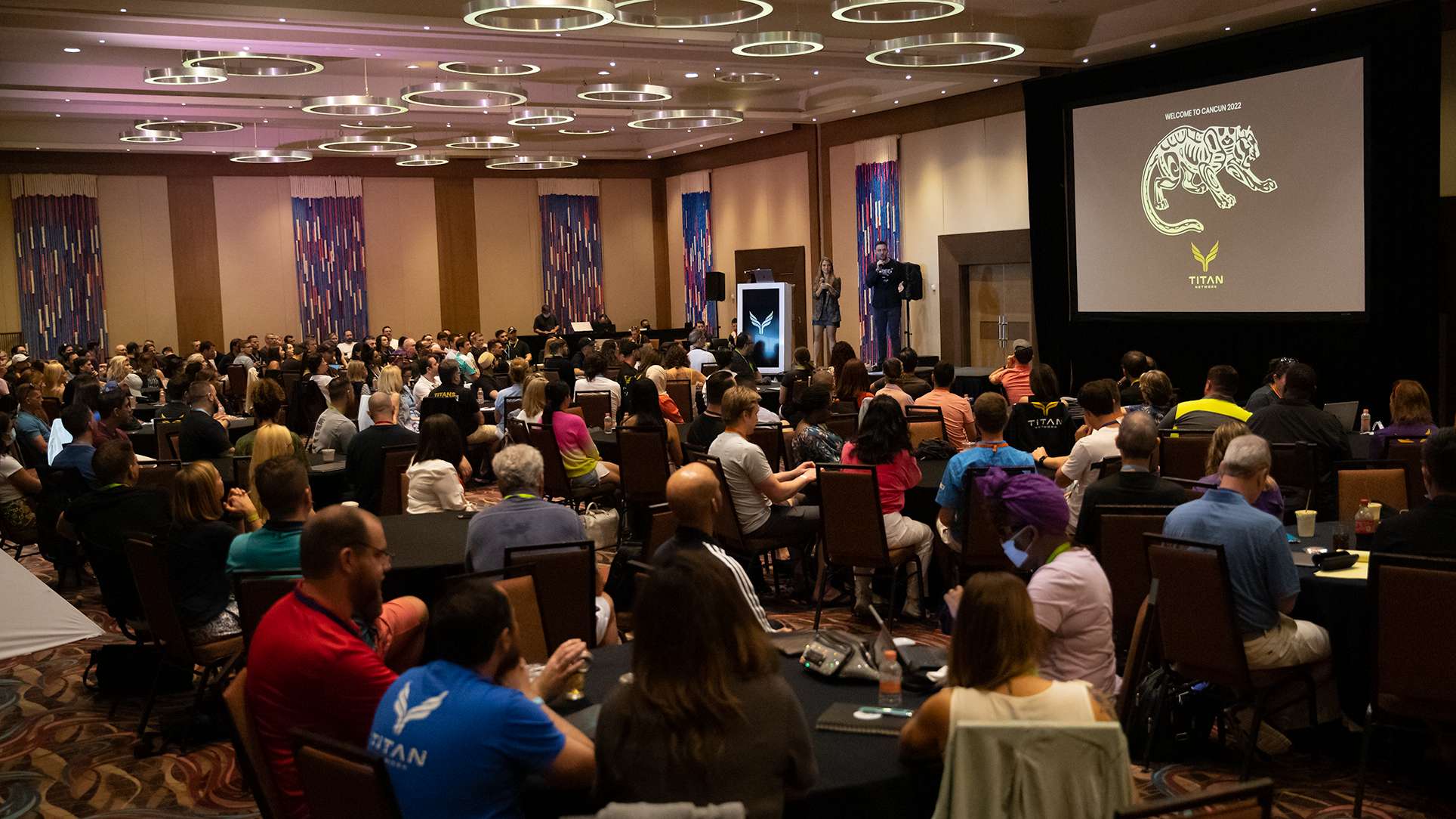
For sellers seeking to maximize operational efficiency and network with industry leaders, Titan Network Events offer invaluable opportunities to learn best practices and connect with peers navigating similar logistics challenges.
| Factor | DIY Logistics | 3PL Partnership | EBITDA Impact |
|---|---|---|---|
| Labor Overhead | $150K-$300K annually | Variable cost structure | +8-12% margin |
| Warehouse Infrastructure | $50K-$200K capex | Zero upfront investment | Improved cash velocity |
| Shipping Rates | Standard carrier pricing | Enterprise-level discounts | 15-25% shipping savings |
| Owner Time Investment | 20-30 hours/week | 5-8 hours/week oversight | Strategic focus ROI |
The profit levers extend beyond simple cost reduction. Elite 3pl logistics providers enable sophisticated inventory positioning, multichannel fulfillment arbitrage, and peak season scaling without the operational complexity that typically caps growth at the $3-5M threshold.
One Titan Network member—a $4.2M electronics brand—recouped 14% in annual margin within eight months of 3PL migration. The key wasn’t just outsourcing fulfillment; it was leveraging their 3PL’s bicoastal network to reduce Prime shipping zones while maintaining FBA and FBM flexibility.
The Full Suite—Core and Advanced Services Elite 3PLs Provide

Understanding what separates commodity fulfillment from strategic 3pl logistics providers requires examining both foundational capabilities and value-added programs that directly impact Amazon KPIs. The best partnerships transform logistics from a cost center into a competitive advantage. For more insights on optimizing your logistics approach, explore this in-depth guide on advanced 3PL strategies.
| Service Category | Efficiency Lever | EBITDA Impact | Amazon Application |
|---|---|---|---|
| AI-Driven Forecasting | Inventory optimization | Reduced carrying costs | Improved IPI scores |
| FBA Prep Services | Compliance automation | Eliminated penalties | Faster check-in times |
| Multichannel Integration | Unified fulfillment | Channel expansion ROI | DTC margin arbitrage |
| Peak Capacity Scaling | Flexible infrastructure | Q4 revenue capture | No stock-out penalties |
Core services form the operational foundation: real-time inventory management with Amazon-compliant prep standards, fast pick/pack/ship with branded inserts, and seamless returns processing. The transportation component includes LTL consolidation, parcel optimization, and direct integration with Amazon’s inbound requirements—eliminating the manual coordination that consumes owner bandwidth.
Advanced programs separate strategic partners from basic fulfillment houses. FBA prep combined with direct-to-consumer capabilities lets you arbitrage between FBA and FBM models based on margin optimization. Multichannel integration provides unified fulfillment across Amazon, Shopify, Walmart, and emerging platforms like TikTok Shop.
AI-driven forecasting and PO optimization reduce both stockout penalties and aged inventory risks. Custom assembly, kitting services, and subscription box fulfillment enable product line expansion without operational complexity. Cross-border customs management and landed cost optimization support international expansion—critical for brands approaching the $10M threshold.
Peak season scaling represents the ultimate test of 3PL partnership value. Elite providers pre-allocate flex capacity, implement surge protocols, and maintain service levels during Q4 demand spikes. This capability alone justifies 3PL investment for brands targeting aggressive holiday growth.
3PL ROI—Where the Real Profits and Cash Flow Advantages Emerge
The financial impact of partnering with 3pl logistics providers extends far beyond simple cost reduction. Elite Amazon sellers experience measurable EBITDA expansion, accelerated cash flow cycles, and operational leverage that creates bandwidth for strategic growth initiatives. The key lies in understanding which metrics to track and how to structure partnerships that compound these advantages over time.
EBITDA & Margin Expansion
Smart 3PL partnerships deliver immediate overhead reduction by eliminating warehouse lease obligations, labor management complexity, and equipment depreciation. More importantly, established 3PLs leverage carrier relationships that individual sellers cannot access—often securing 15-25% better shipping rates through consolidated volume contracts. For a deeper understanding of EBITDA and its role in logistics, see this comprehensive explanation of EBITDA.
A $4.2M supplement brand in our network documented a 12% annual logistics cost reduction within eight months of 3PL migration. The savings came from three sources: eliminated warehouse overhead ($180K annually), reduced shipping costs through 3PL carrier contracts ($95K), and avoided labor scaling costs during peak season ($75K). This $350K operational savings dropped directly to EBITDA.
Inventory Agility and Cash Flow Acceleration
Advanced 3PLs provide real-time inventory visibility across multiple channels, enabling faster decision-making on reorders, markdowns, and channel allocation. This transparency directly impacts cash conversion cycles by reducing dead stock and optimizing working capital deployment.
Geographic distribution through 3PL networks cuts average delivery times by 1-3 days, reducing customer service inquiries and return rates. A $6M home goods seller reduced their cash-to-cash cycle from 89 days to 67 days by implementing bi-coastal 3PL distribution, freeing up $420K in working capital for inventory expansion and new product launches.
The compounding effect emerges through improved Inventory Performance Index (IPI) scores. Sellers maintaining IPI above 450 through 3PL optimization avoid storage limit restrictions and long-term storage fees, preserving cash flow during critical growth phases.
Risk, Resilience, and Bandwidth
Geographic diversification through 3PL networks provides operational resilience that single-location operations cannot match. Weather disruptions, labor strikes, or facility issues at one location don’t halt your entire operation when inventory and fulfillment are distributed across multiple 3PL sites.
The bandwidth creation represents the most undervalued 3PL benefit. Successful sellers report reclaiming 20-25 hours weekly previously spent on logistics coordination, inventory management, and fulfillment troubleshooting. This time reallocation enables focus on high-value activities: product development, market expansion, and strategic partnerships that drive exponential growth rather than linear operational improvements.
3PL vs. Other Logistics Models—Cutting the Confusion on Who Should Own What
The logistics landscape offers multiple partnership models, each with distinct cost structures, control levels, and scalability profiles. Understanding these differences prevents costly misalignment between your operational needs and chosen logistics strategy. The decision framework centers on four critical factors: EBITDA impact, operational complexity, Amazon integration depth, and scalability ceiling.
| Model | EBITDA Impact | Amazon Integration | Scalability | Best For |
|---|---|---|---|---|
| 3PL | 8-15% cost reduction | Native API connections | Unlimited flex capacity | $1M-$50M+ brands |
| 4PL | 12-20% optimization | Full network orchestration | Global expansion ready | $10M+ multi-channel |
| In-House | High capex burden | Custom development needed | Limited by facility size | $20M+ single category |
| Freight Forwarder | Transportation only | Manual coordination | No fulfillment scaling | Import/export focus |
3PL vs. 4PL
4PLs function as logistics general contractors, managing multiple 3PL relationships and optimizing your entire supply chain network. This model suits established sellers ($10M+) managing complex multi-channel operations across diverse product categories. The 4PL assumes responsibility for carrier selection, route optimization, and performance management across your entire logistics ecosystem.
The upgrade from 3PL to 4PL makes sense when you’re managing 3+ fulfillment locations, selling across 5+ channels, or expanding internationally. However, most Amazon-focused sellers find 3PLs provide sufficient sophistication without the additional management layer and cost structure that 4PLs introduce.
3PL vs. In-House Logistics
In-house logistics offers maximum control but demands significant capital investment and management bandwidth. The break-even point typically occurs around $15-20M annual revenue, where warehouse lease, labor, and WMS costs justify the control premium.
For most $1M-$10M brands, 3PLs deliver superior EBITDA through economies of scale. You’re leveraging their carrier contracts, established SOPs, and distributed infrastructure without the fixed costs. The operational complexity of managing warehouse staff, handling peak season hiring, and maintaining Amazon compliance standards often consumes 30+ hours weekly of owner focus—bandwidth better allocated to product development or market expansion.
3PL vs. Freight Forwarders and Fulfillment Centers
Freight forwarders excel at international shipping and customs clearance but lack the warehousing and order fulfillment capabilities Amazon sellers require. They’re tactical partners for inbound logistics, not strategic fulfillment solutions.
Basic fulfillment centers handle pick-pack-ship but miss the value-added services that differentiate your brand. Elite 3PLs provide FBA prep, multichannel inventory allocation, and branded packaging—services that directly impact customer lifetime value and repeat purchase rates. The cost differential is typically 15-25%, but the EBITDA impact from improved operations and reduced owner involvement justifies the premium.
How 3PLs Integrate with Amazon and Other E-Commerce Channels—The Reality for $1M+ Sellers

Seamless integration between 3pl logistics providers and your sales channels determines whether you unlock operational efficiency or create new bottlenecks. The technical execution matters less than the operational protocols that maintain Amazon’s strict performance standards while scaling across platforms.
Platform Integrations—Amazon, Shopify, Walmart, and More
Elite 3PLs maintain direct API connections with major platforms, enabling real-time inventory sync and automated order routing. For Amazon specifically, verify your 3PL can handle FBA shipment creation, tracking uploads, and return processing without manual intervention. For actionable tips on selling across multiple platforms, read this guide to multichannel selling.
The critical SOP involves new SKU onboarding: Your 3PL should receive inventory, complete Amazon prep requirements, and create FBA shipments within 48 hours of arrival. This timeline prevents inventory aging and maintains your IPI score during rapid product launches.
Integration Success Metric: Track order accuracy rates above 99.5% and same-day order processing for orders placed before 2 PM. These benchmarks ensure Amazon’s performance metrics remain unaffected by 3PL operations.
Troubleshooting: Common Pitfalls and Data Hygiene Musts
Inventory discrepancies represent the highest risk to Amazon account health. Implement daily cycle counting protocols and require your 3PL to provide real-time inventory reports accessible through your dashboard. Any variance above 0.5% triggers immediate investigation and correction.
For misdirected stock or return processing delays, establish escalation protocols with defined response times. Your 3PL should provide dedicated account management with direct phone access, not ticket-based support systems that delay resolution of time-sensitive issues affecting your Amazon metrics.
Evaluating, Negotiating & Maximizing a 3PL Relationship
Strategic 3PL selection requires evaluating partners through an Amazon-first lens, focusing on operational capabilities that directly impact your EBITDA and growth trajectory. The evaluation process should prioritize proven Amazon expertise over generic logistics capabilities. If you want to connect directly with logistics experts, reach out to Titan Network for tailored support.
Essential Evaluation Criteria
Demand references from current Amazon sellers in your revenue range and product categories. Verify their WMS can handle Amazon’s labeling requirements, FBA prep standards, and multichannel inventory allocation without manual workarounds.
Evaluate their carrier relationships and shipping zones. West Coast 3PLs offer advantages for international inventory and faster delivery to major population centers, while East Coast facilities excel for Amazon’s fulfillment network integration. The optimal solution often involves dual-coast partnerships for brands exceeding $5M annually.
| Evaluation Criteria | Minimum Standard | Elite Performance | EBITDA Impact |
|---|---|---|---|
| Order Accuracy | 99.5% | 99.9% | Reduced refunds/replacements |
| Same-Day Processing | Orders by 2 PM | Orders by 5 PM | Faster cash conversion |
| FBA Prep Turnaround | 48 hours | 24 hours | Improved IPI scores |
| Peak Season Capacity | 2x base volume | 3x base volume | Q4 revenue maximization |
How to Structure Negotiations to Safeguard Margin
Negotiate tiered pricing with volume commitments that align with your growth projections. Include performance-based penalties for missed SLAs, particularly order accuracy and processing times that affect Amazon metrics.
Structure billing transparency with itemized costs for storage, pick-pack, and value-added services. Avoid percentage-based pricing on order volume, which can erode margin as you scale. Instead, lock in flat rates or declining per-unit fees as your volume increases. This approach ensures your EBITDA gains scale with your business, not your provider’s margin.
For additional learning and hands-on experience, consider attending Titan Network Workshops designed for Amazon sellers looking to maximize their 3PL partnerships.
For a broader perspective on the logistics industry, review this U.S. Economic Census report on transportation and warehousing.
Frequently Asked Questions
How do 3PL logistics providers help Amazon sellers achieve EBITDA growth beyond just cost savings?
3PL providers drive EBITDA growth by delivering operational leverage—reducing labor overhead and warehouse capex while enabling enterprise-level shipping discounts. They also optimize inventory positioning and multichannel fulfillment, unlocking margin expansion opportunities that go beyond simple cost reduction.
What are the key differences between managing logistics in-house versus partnering with a 3PL provider for established Amazon brands?
In-house logistics demands significant fixed costs in labor, infrastructure, and owner time, limiting scalability and cash flow flexibility. Partnering with a 3PL converts these into variable expenses, reduces owner oversight from 20-30 hours to under 10, and provides access to specialized infrastructure and negotiated carrier rates, directly improving margins and freeing bandwidth for growth.
Which advanced services do elite 3PL providers offer that directly improve Amazon seller KPIs and operational efficiency?
Elite 3PLs offer sophisticated inventory positioning, multichannel fulfillment arbitrage, peak season scalability, and reverse logistics management. These services reduce stockouts, improve order accuracy, and streamline returns, all of which enhance seller KPIs like on-time delivery rates, inventory turnover, and customer satisfaction.
How can 3PL partnerships accelerate cash flow cycles and enable strategic growth for sellers doing $1M to $10M+ in revenue?
3PLs improve cash velocity by eliminating upfront warehouse investments and converting fixed costs into variable expenses, accelerating working capital turnover. This operational flexibility allows sellers to scale faster, test new channels, and focus owner time on strategic initiatives rather than day-to-day fulfillment management.